
Have you ever thought about how your breath changes when you're trying to hold a tough pose? It may become less deep. You might be holding it without knowing it. The truth is that your breath tells you everything you need to know about your practice. Yoga breathing is more than just a skill; it's your guide. That's what we always say at Pankaj Yogpeeth. Something beautiful happens when you breathe consciously. Your body gets softer. Your thoughts stop. It's possible to make even the easiest pose strong.
So why is it important to breathe when you do yoga? As stretching is all yoga is without it. You're getting in touch with something deeper: your energy, your calm, your presence.
You've come to the right place if you want to learn how to breathe properly during yoga or find breathing techniques that yoga teachers swear by. These five breathing tips will quickly change how you feel on the mat, whether you are a beginner or an experienced yogi. This is not something you have to learn quickly. All you have to do is pay attention. Are you ready? Let's take a deep breath.
Why Breathing Is So Important in Yoga Practice
"Focus on your breath" has been said a hundred times. But why is it important to breathe when doing yoga? Because yoga breathing techniques aren't just about getting oxygen into your body, they also link your mind and body to your actions. Everything changes when you breathe with purpose.
How Yogic Breathing Works (Without All the Jargon)
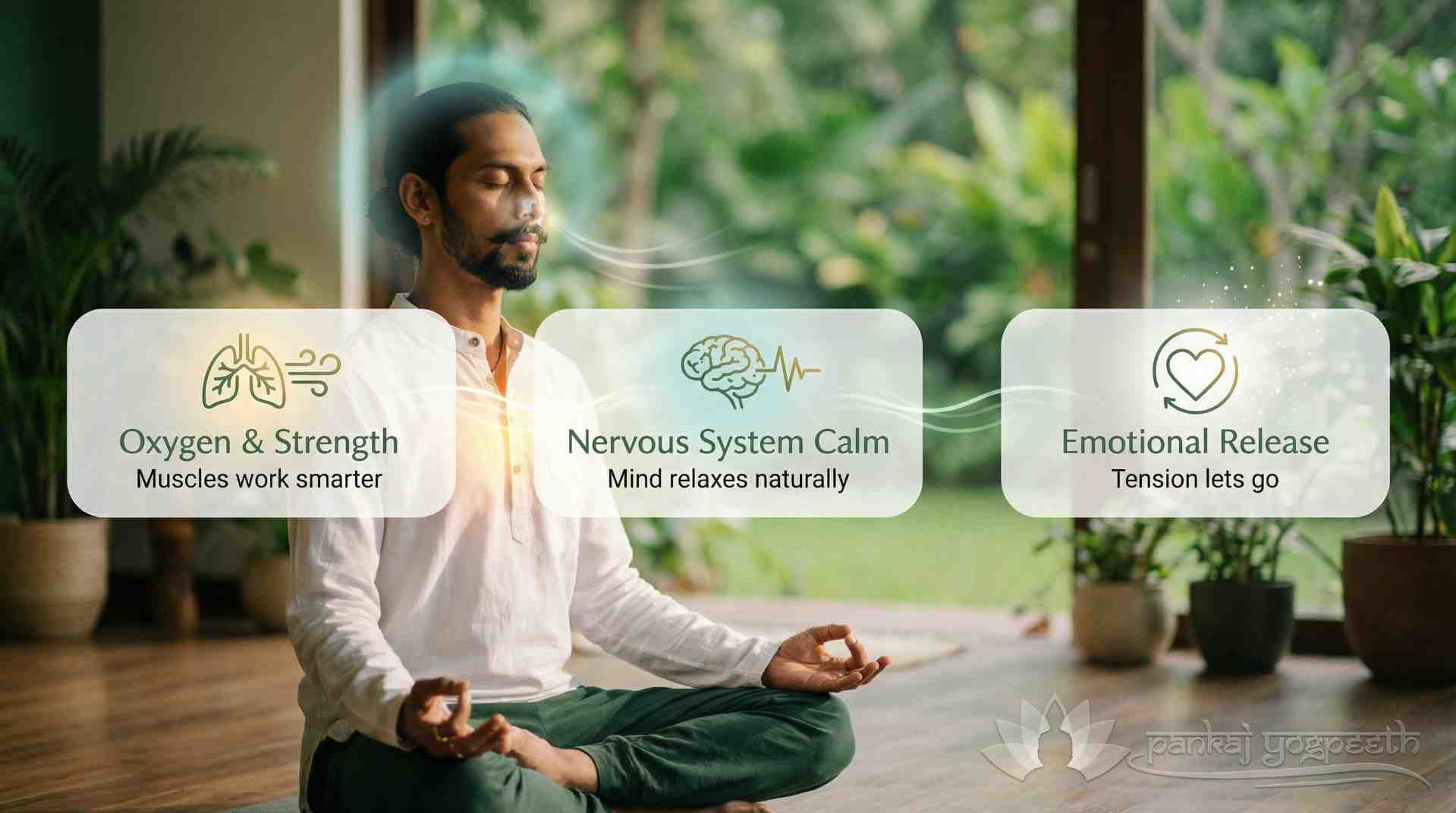
What happens during breath control yoga?
- Your muscles work smarter: If you have enough oxygen, you can stay in poses for longer without getting tired. That is the power of yoga breathing techniques.
- Your nervous system calms down: Your brain knows you're safe when you breathe slowly. Tension goes away.
- Emotion release: Ever feel lighter after letting out a big breath? When you breathe in and out, you let go of what you've been hanging on to.
It's just how your body works when you give it what it needs.
Yogic Breath vs Normal Breathing - What's the Difference?
When we breathe, most of us take short breaths that don't go through our chest. Quick, tight, and out of it. It does the job, but that's about it.Yoga-style breathing movements are not the same. First, you breathe into your belly and let it get bigger. Then your ribs. Then your chest. It's full. On purpose. All done.
This is what we mean by "yogic breathing": breathing with your whole body, not just your lungs.
Normal Breathing vs Yogic Breathing
| Aspect |
Normal Breathing |
Yogic Breathing |
| Depth |
Shallow,chest-only |
Full-body (belly → ribs → chest) |
| Rhythm |
Irregular,unconscious |
Steady, intentional |
| Effect on Mind |
Restless |
Calm,focused |
| Effect on Body |
Tension builds |
Tension releases |
| Oxygen Flow |
Limited |
Optimal |
Everything gets better when you do yoga and pay attention to your breathing. Your stance is straight naturally. You feel more energised. Your thoughts calm down. You don't need to train for years.
Tip 1 - Slow Down Your Inhale and Exhale
Many people fail to notice when they breathe quickly during yoga. But in yoga, everything changes when you breathe in and out more slowly. Your balance gets better. It clears your mind. For deep breathing, yoga isn't about breathing more; it's about breathing more slowly and deliberately.
The Ideal Breathing Rhythm for Yoga
When you do yoga, deep breathing has a simple rhythm:
- Take four to five deep breaths in through your nose.
- Fill your belly first, then your chest.
- Exhale slowly for 5 to 6 seconds, then let go of all the air.
- A longer exhale than an inhale: this helps you stay calm and focused.
Why? Your nervous system knows it's safe to relax when you breathe for a longer time. Do you want to work on this now? Try Cat-Cow or Child's Pose. Close your eyes and sit down. Take 4 deep breaths. 6 seconds of exhaling. Feel your shoulders go down. Let go of your jaw.This is what yoga breathing routines are all about: letting your breath help you practice without forcing it. Do one move first. Take these deep breaths. Take note of the change
Tip 2 - Breathe Through the Nose, Not the Mouth
In yoga, your nose is the most helpful tool. Not your mouth. Most of the breathing exercises yoga teachers teach focus on breathing through the nose. There is a reason for that, and it's not just to follow the rules.
Benefits of Nasal Breathing in Yoga
Your body gets just what it needs when you breathe through your nose during practice:
- Cleans and warms the air: your nose does the work that your lungs would have to do otherwise.
- Your lung capacity improves: taking big breaths through your nose naturally slows your breathing.
- Mouth breathing distracts you from what you're doing. Nose breathing holds it down.
Keeping your awareness inside, your breath steady, and your practice meditative is what yogic breathing methods are all about. Some yoga breathing exercises, such as Kapalbhati (skull-shining breath) and Bhastrika (bellows breath), involve mouth breathing. But these are unique exercises that should only be done with a teacher. For everything else?
Nose Breathing vs Mouth Breathing in Yoga
| Aspect |
Nose Breathing |
Mouth Breathing |
| Breath Quality |
Filtered, warmed, deeper |
Unfiltered, shallow |
| Mental Effect |
Calming, focused |
Activating, scattered |
| When to Use |
Most yoga practices |
Only specific pranayama |
Tip 3 - Synchronize Breath With Movement
In breathing yoga, your breath is in charge. This is a secret that changes everything. It follows your body.A lot of people do it wrong. First, they move, then they try to find a place to breathe. When you use real yoga breathing methods, on the other hand, you breathe first, then move.
How to Match Breath With Asanas
Not hard to follow once you know it:
- As you open your chest, lift your arms, and arch your back, take a deep breath in. Taking a breath makes room.
- When you fold forward, twist, or draw inward, let out a breath. Tension is eased by breathing.
This is what yoga breathing routines are based on. It's not by chance. When your mouth opens, your body wants to breathe in. When it shuts, it wants to breathe out.There is something beautiful that happens when you move and breathe together in a yoga way. Don't force them. Allow your body to do its job. Loss of fatigue. Awareness grows. It feels like every change is easier and more linked.
As you do Surya Namaskar (Sun Salutation), try it out. Take a deep breath in when you raise your arms. As you fold down, let out a breath. Inhale and do a plank. Inhale and do downward dog. Don't let your thoughts control your breath; let it.
Tip 4 - Use Deep Belly Breathing for Stability
Want to be more balanced in your poses? It's not just strong abs. It's your breath. If you want to do yoga for deep breathing, start in your belly, not your chest. You make an anchor when you breathe into your belly. Your balance gets better. Your body calms down.
So this is what it means to breathe deeply in yoga: breathe into your centre, where your power lies.
How to Practice Diaphragmatic Breathing in Yoga
Yoga breathing exercises are easy to do, like these:
- Let your belly expand on the inhale: Soften and fill, don't pull in.
- Pull it in slowly as you let out air: Completely let go
- Keep your chest and shoulders relaxed: Let your stomach do the work.
You can do it in Warrior III or Tree Pose. Lie down on your stomach with one hand. Take a deep breath in and hold it there. Feel like you have a good balance.
Chest Breathing vs Belly Breathing
| Aspect |
Chest Breathing |
Belly Breathing |
| Depth |
Shallow, upper body |
Deep, from diaphragm |
| Stability |
Weak, unsteady |
Strong, grounded |
| Energy |
Draining |
Sustaining, calm |
Tip 5 - Add Simple Pranayama to Your Daily Practice
You don't need an hour. You can change the way you practice with just 5 to 10 minutes of breathing.These five yoga breathing routines are easy to do. They are simple things that can help you concentrate, keep your energy in check, and clear your mind. If you want to practice yoga while breathing, this is the best way to do it.
Best Pranayama for Everyday Yoga
First, do these three:
- Alternate Nostril Breathing (Anulom Vilom): Helps keep your brain balanced and reduces stress.
- Bhramari (Humming Bee Breath): eases stress and calms the nervous system.
- Deep Slow Breathing: Long, slow breaths that clear your mind and body
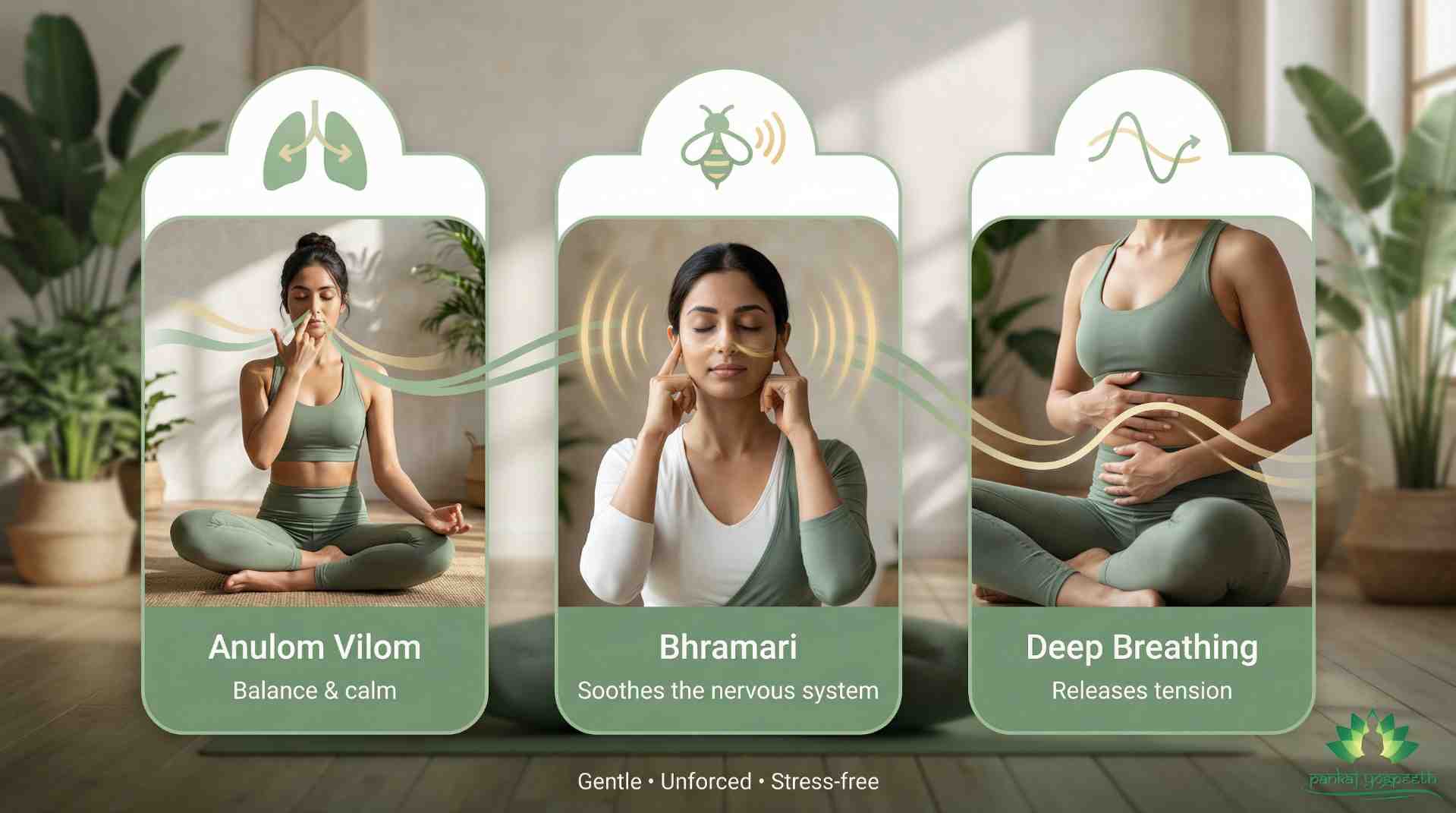
These are the basic steps of yoga breathing and breathing yoga. Do not use force. Stress-free.If possible, do the exercise on an empty stomach in the morning. Do not force your breath. If it feels tight, take a step back.
Beginner-Friendly Pranayama Guide
| Pranayama |
Benefits |
Duration |
| Anulom Vilom |
Balances energy, calms mind |
5–7 minutes |
| Bhramari |
Reduces stress, improves focus |
3–5 minutes |
| Deep Slow Breathing |
Grounds body, resets system |
5–10 minutes |
Common Breathing Mistakes to Avoid in Yoga
Even very skilled yogis make these mistakes. Keep an eye out for these things:
- Holding your breath without realising it: You stop breathing because you are so focused on the pose. Your body gets tense. It gets hard to hold the pose.
- Rushing your breath: Breathing quickly and shallowly defeats the goal. The breathing exercises that yoga teachers use are meant to make you move more slowly.
- Forcing pranayama: Do not push yourself too hard if you feel you cannot breathe. When you breathe in yoga, it should feel natural, never forced.
- Forgetting to breathe in tough poses: You need to breathe more when the pose is hard.
People who come to Pankaj Yogpeeth are told to pay attention to their breath without trying to control it. Breathe in what it needs. Pay attention to it.
How Proper Breathing Transforms Your Yoga Practice
If you do yogic breathing exercises on a daily basis, your breath will be steady and helpful instead of quick or strained. This steadiness makes yoga poses feel lighter and more comfortable, and it also helps your attention and balance. When you do yoga for deep breathing, your energy starts to flow more easily through your body, which makes you feel less tense and tired. As time goes on, your practice becomes more like meditation. This is when yoga goes from being just exercise to a greater inner discipline that is good for your body and mind.
Let Your Breath Lead Your Yoga Journey with Pankaj Yogpeeth
Your breath is always with you, whether it's deep or short, calm or tense. Your movements become more stable, and your mind is calmer when you practice conscious yoga breathing and the right breathing methods.
Every practice at Pankaj Yogpeeth starts with the breath. We help you experience yoga in ways other than the physical through simple breathing exercises and mindful direction. Join Pankaj Yogpeeth for more yoga tips and gentle direction from our teacher. Let your breath guide you on and off the mat.
Final Thoughts
Remember how, at the beginning, we asked you to notice your breath while holding a tough pose? That small awareness is where your real practice begins. Breathing is not just a part of yoga; it is yoga. When the breath flows, the body softens, the mind settles, and every pose finds its quiet strength. So tomorrow, when you step onto your mat, do not chase the perfect pose. Follow the breath. It already knows the way.
FAQ (Frequently Asked Questions):
Helpful Resources
Our Blog: Inside Daily Life at Pankaj Yogpeeth
Our Blog: Should You Choose Yoga or Pilates?