
Everyone has been there: they get excited about putting out their yoga mat, but then they forget to do it a few days later. Things get busy, and you lose drive. All of a sudden, doing yoga at home every day feels more like a chore than a pleasure. But here's the truth: it doesn't have to be hard to stay constant. These five simple yoga tips will help you build a routine that works for you, whether you're new to yoga or coming back to your mat after a break. We'll talk about some ways you can make your yoga exercise something you look forward to every day.
Why Staying Motivated in Your Daily Yoga Practice Matters
Your daily yoga practice is more than stretching-it's your moment to breathe, reset, and reconnect with yourself. When you practice yoga every day, something beautiful happens: your body starts to remember, your mind stays calm, and you build the kind of inner strength in you that helps you handle whatever life throws your way.
Practising yoga every day teaches mental discipline without feeling like work. It's about showing up, even for just 10 minutes, and showing high respect for the commitment you have promised to yourself. Your muscles change, your breath deepens, and slowly, you notice changes-not just physically, but emotionally and spiritually too.
Really, it's hard to stay inspired at home without a teacher or yoga guru. That's why most people quit. Your yoga mat stays in the corner, rolled up, as the days go by and other things come up. However, good news: if you know the right yoga practice tips, you can make a routine that doesn't feel forced.
"The hardest part of yoga isn't the pose-it's unrolling your mat on the days you'd rather skip."
Benefits of a Consistent Daily Yoga Practice
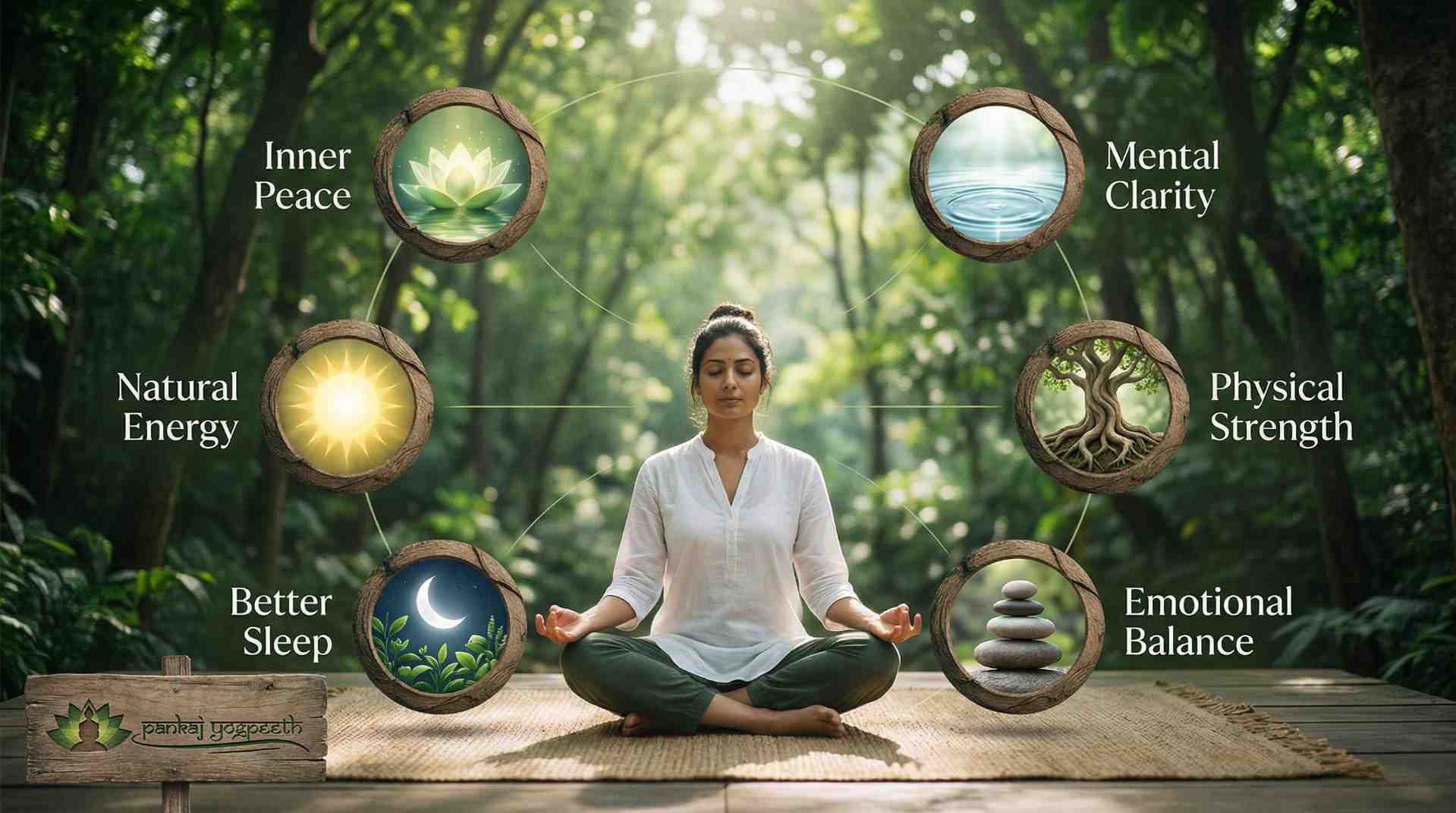
| Benefit |
What It Means for You |
| Mental Clarity |
Less stress, better focus |
| Physical Strength |
Improved flexibility and posture |
| Emotional Balance |
Calm responses instead of reactions |
| Better Sleep |
Deeper, more restful nights |
| Natural Energy |
Vitality without caffeine |
| Inner Peace |
Stronger connection to yourself |
Why People Lose Motivation Practicing Yoga at Home
We all mean well when we start. You give yourself a spot, buy a mat, and promise to work out every day. But then life happens, and all of a sudden your mat is just sitting there collecting dust while you wonder where your drive went.
This is what stops most people from doing yoga at home:
- Lack of routine: You'll keep saying "I'll do it later" to your daily yoga exercise if you don't set a time. Later never comes. It's too easy to skip if your brain doesn't have that framework.
- No guidance: A teacher walks you through everything in class. At home? You're stuck on your mat, not sure what to do next or whether you're doing it right.
- Distractions everywhere: There are a lot of things at home that want your attention: the laundry pile, the ringing phone, and family members who need your help.
- Unrealistic expectations: It's important to have an hour. It's what you expect. And when it doesn't, anger and a lack of drive set in.
"Progress lives in the messy middle-not perfection, just showing up again and again."
Motivation Killers vs Simple Fixes
| What Kills Your Motivation |
Simple Fix That Actually Work |
| No fixed schedule |
Same time daily-even 10 minutes counts |
| Feeling lost without guidance |
Follow a simple online video or 3-pose routine |
| Too many distractions |
Dedicate one corner, silence your phone |
| Expecting perfection |
Celebrate effort over perfection |
| Boring repetition |
Try new poses, music, or yoga styles |
| "No time" excuse |
Start with just 5 minutes daily |
Tip 1 - Create a Fixed Time for Your Daily Yoga Practice
The easiest way to keep up with your everyday yoga? Pick a time and keep it safe. "Whenever I feel like it" is not an option; you have to commit to the schedule, like brushing your teeth.
If you do yoga every day at the same time, your body gets used to it. It stops working on its own. When you do yoga every day at home, whether it's at 6 AM before anyone else is awake or at 8 PM after dinner, it stops being something you "should do" and becomes a normal habit in your life.
True story: drive changes over time. When you have a set time for yoga, on the other hand, you don't need to be motivated to do it; you just show up. Start small. A regular practice of even 10 minutes is better than a practice of any length for an hour. Give your brain a design. It wants them.
Morning vs Evening Yoga Practice - What Works Best
No such thing as a "perfect" time. Only do what works for you. But being aware of the difference can help you create a yoga plan you stick to.
- Morning practice: Your mind is clear, but your body is stiff. Yoga in the morning gets you ready for the day and lets you practice before your life gets busy. Want to do yoga every day without any reason? The mornings win.
- Evening practice: You feel warmer and can move around better. Doing yoga in the evening can help you relax, let go of the day's stress, and get ready for sleep. Great if you have a busy morning or need to do yoga to relax.
The real answer? When you're going to show up is the best time. Try both for a week and see how you feel. Then decide which one works best for your daily yoga practice.
Tip 2 - Design a Dedicated Space for Practicing Yoga at Home
If you want to do yoga at home, you don't need a fancy gym. All you need is a clear space. Your mat should have a place in a corner, a room, or even just a clean area of the floor. Some things change when you have a place just for yoga.
As time goes on, it gets easier to start, stay focused, and make yoga a daily practice.It's important because there's no movement when your room is ready. You don't have to move chairs, look for your mat, or clean up every time.
You just start by stepping on your mat. That ease makes all the difference between getting things done and putting them off.The room where you do yoga doesn't have to be perfect or look good on Instagram. It only needs to feel like your space, calm, friendly, and free of other things that are going on. It could be by a window with lots of natural light or in a quiet spot that makes you feel at ease. Make it easy and yours.
How a Sacred Yoga Space Improves Consistency
Planning a place to do yoga every day is like working out your brain. Your mind knows every time you walk that way, "This is where I practice." This is where I breathe. That thought spark is strong. It stops you from making bad decisions and makes you more consistent without requiring effort. You don't have to tell yourself it; your body will remember if you just go to that spot.
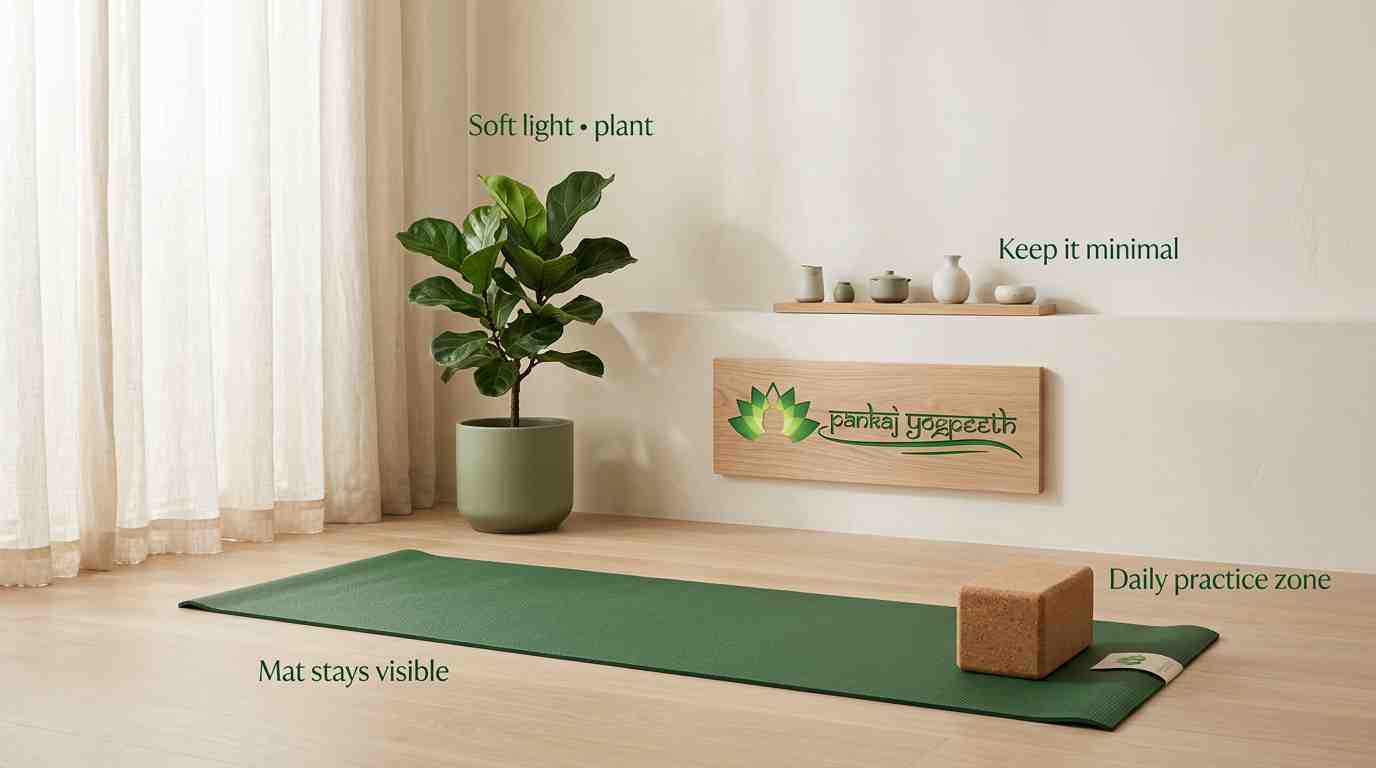
Simple ways to make your room work for yoga:
- Keep it minimal: Your mat and maybe a block. Focus is lost in clutter.
- Make it inviting: It feels calm when there is a lamp, soft light, or a small plant there.
- Keep your mat visible: Do not hide it. Seeing it makes you want to use it.
- Set boundaries: It's okay for you to use this place for practice for 10 minutes or more. Let your family know
Not being perfect is not the goal. It's creating a place that draws you in rather than pushing you away. When doing yoga feels easier because your surroundings support it, you'll be more likely to keep doing it.
Ideal Home Yoga Space Setup
| Element |
Why It Matters |
| Your Yoga Mat |
Your foundation-keep it visible and ready |
| Natural Light |
Energizes morning, calms evening practice |
| Minimal Clutter |
Reduces distractions, clears your mind |
| Props (Optional) |
Blocks or straps support your poses |
| Calming Touch |
A candle or plant creates peaceful energy |
| Phone-Free Zone |
Eliminates your biggest distraction |
Tip 3 - Set Realistic Goals for Your Yoga Practice
Want to stop doing yoga right away? Setting goals that sound great but are hard to reach. You promise to work out for an hour every day, do perfect poses, and never miss a lesson. Then things go wrong in your life, and all of a sudden, you feel like a loser.
Suppose you want to get better at yoga: set attainable goals that meet you where you are. When you do yoga and set goals that you can reach, you avoid burning out and build energy. It's easy to get small wins.Doing more isn't the key to getting better at yoga; doing what you can, every time, is. A 10-minute practice that you stick to is better than a 60-minute plan that you keep putting off.
Start with what you can do right now. Maybe you need to do five sun salutations or stay in a pose for twenty seconds longer. Small, steady steps are what make progress.
"Don't aim for perfect. Aim for present. The rest will follow."
Small Daily Yoga Goals vs Big Expectations
More practices end because of high standards than for any other reason. You picture yourself moving easily and becoming flexible overnight. When things don't match up, you give up.
It's possible to reach small daily goals, so they work.
Big expectations that backfire
- "I'll practice an hour every day"
- "I'll master headstand next month"
- "I need perfect flexibility to really 'do yoga"
Small yoga practice improvement goals that stick
- "I'll do 10 minutes every morning"
- "I'll hold plank 5 seconds longer this week"
- "I'll practice three times this week"
Quick yoga tips for goals that help:
- Focus on consistency over intensity: five minutes a day is better than an hour a week.
- Celebrate small wins: Did you get your toes closer together? That's progress.
- Keep track of work, not perfection: Did you show up? That's making it.
- Change as needed: Your goals should change as you do
Tip 4 - Follow a Structured Yoga Practice Plan
Have you ever been on your mat and thought, "What do I do now?" That kind of confusion quickly kills your drive. Every practice is a mental fight when you don't have a plan. An organised yoga practice guide takes the guesswork out of it. This is not a whim-you're following a clear plan. When you have a yoga practice schedule, you focus on practising instead of making plans.
It doesn't need to be hard. Doing even five poses in the same way every day will help you stay organised. You can go to yoga with a plan, and your body will learn the flow. Your mind will also calm down. Start with something simple.
Pick three to five poses that make you feel good, and do them every day in that order. Add more as you get used to it. Structure doesn't hold you back; it frees you from having to make too many choices.
Simple Yoga Practice Tips For Using Guided Practice
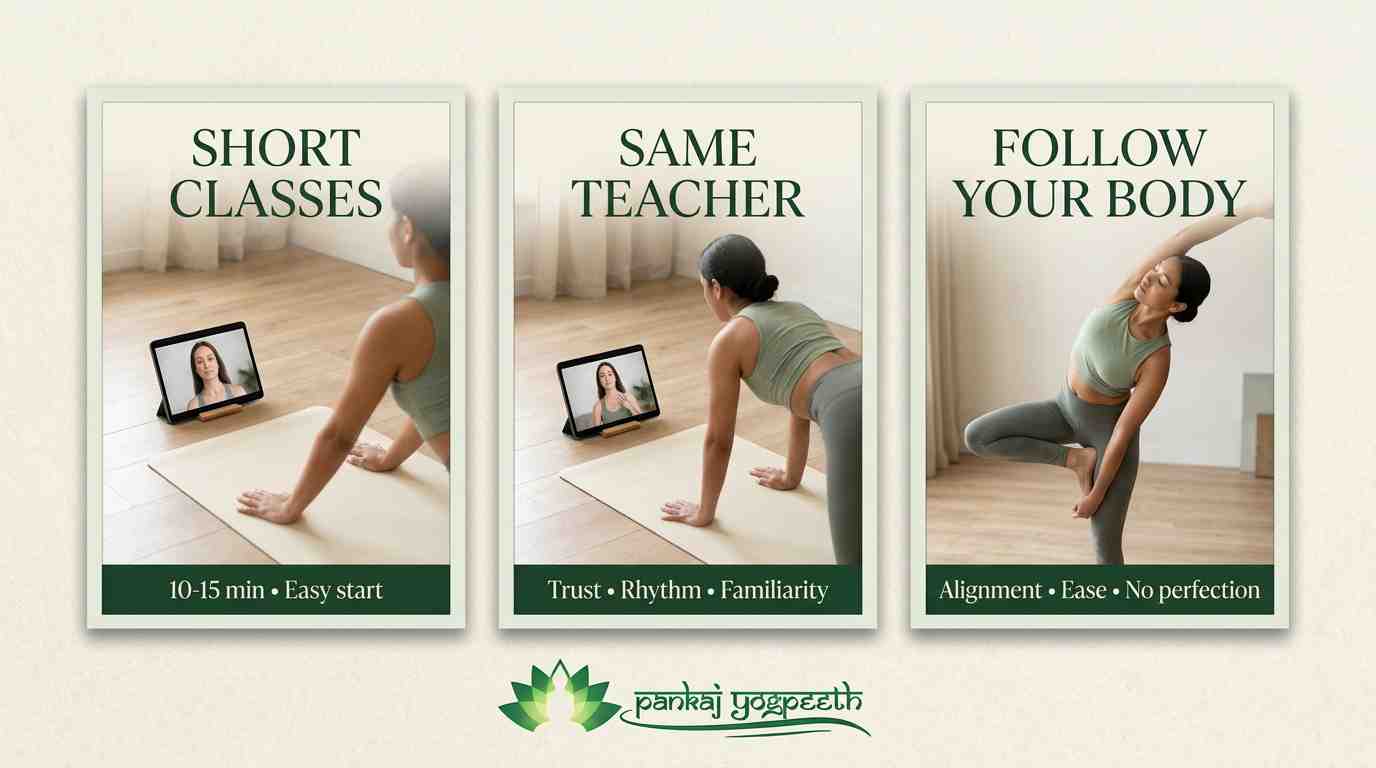
- Start with short videos: 10- to 15-minute classes are easy to handle and help you stay on track.
- Follow the same teacher initially: Know-how boosts trust. When you're ready, look into other options.
- Focus on alignment cues: A good teacher tells you not only what to do but also why you should do it.
- Don't chase perfection: The goal is shown to you by guided practice, but what counts is how it feels in your body.
Getting motivated is easier when you have someone to help you through exercise. On your mat, you're not by yourself; you're a part of something bigger.
Beginner to Advanced Yoga Practice Plan
| Level |
Duration |
Focus |
Sample Practice |
| Beginner |
10-15 min |
Basic poses, breathing |
Cat-Cow, Child's Pose, Downward Dog, Savasana |
| Intermediate |
20-30 min |
Building strength, flow |
Sun Salutations, Warrior series, balance poses |
| Intermediate |
30-45 min |
Flexibility, inversions |
Full vinyasa flow, arm balances, deep stretches |
Tip 5 - Track Your Yoga Progress Without Pressure
It's not always easy to see progress in yoga. It's okay if you don't always "feel" better. But keeping a gentle record of your daily yoga practice can help you get back on track when you lose drive.The key? Track slowly. Not counting poses or comparing yourself over and over, but just noticing: Did I show up? How did my body feel? What changed?
When you use gentle tracking to improve your yoga practice, you become more aware without judging yourself. Like, maybe you feel better in the evening or that some poses are easier after a few weeks.
Simple yoga tips for tracking without pressure:
- Keep a simple journal: Write down things like "Practiced for 15 minutes, felt calm" or "Skipped today, tired."Don't judge.
- Notice non-physical progress: Did you take longer breaths? Stay here? That's progress.
- Track consistency, not perfection: Note the days you practised, no matter how short. That design makes you feel good.
- Celebrate effort: Did you practice even though you were tired? That wins it.
Tracking isn't a way to prove anything. It means keeping in touch with yourself and appreciating your journey just the way it is.
How Pankaj Yogpeeth Supports Your Daily Yoga Practice
When you do yoga at home, it can feel lonely. You're by yourself and not sure if you're doing things right. When you get the right help, everything changes. At Pankaj Yogpeeth, we teach yoga with kindness, honesty, and an understanding of where you are on your path.
- Structured guidance that grows with you: Clear routines help you get better at yoga without being too much. You don't have to guess; you know how to move forward.
- Support for practicing at home: We make it possible to do yoga at home without getting stressed out. Instead of just telling you what to do, we give you tools to help you build a practice that sticks.
- Authentic teaching rooted in tradition: Breathwork, mindfulness, alignment, and philosophy are some of the traditional yogic ideals that our guided yoga practice is based on. You are learning a method that is good for more than just your body.
We're here for you every step of the way if you want to improve your practice with help that respects both tradition and your own path.
Final Thoughts - Make Yoga a Lifelong Daily Practice
Every day, you don't need to be great at yoga. Just make sure it's yours: loyal, honest, and nice.There will be days when you'll just flow. You won't always make it to the fifth minute. Asana is in both. Being open isn't important; what matters is showing up over and over again.You can do yoga for a very long time. Each time you step on your mat, you start over. That's the beauty: you can start over whenever you want.
Take care of yourself. Don't compare things. Believe in the process.Yoga changes the way you live and connect with yourself at Pankaj Yogpeeth. Please know that we are here to help you on your trip, no matter where it starts or how deep it goes.
Get your mat ready. You deserve this time to yourself, so keep going. "The mat doesn't care how long you've been gone. It only cares that you're back.
FAQ (Frequently Asked Questions):
Helpful Resources
Our Blog: What Is Walking Yoga and Why It Matters
Course: 200 Hour Yoga TTC in Rishikesh
Our Blog: Eye Relaxation Yoga for Screen Users