
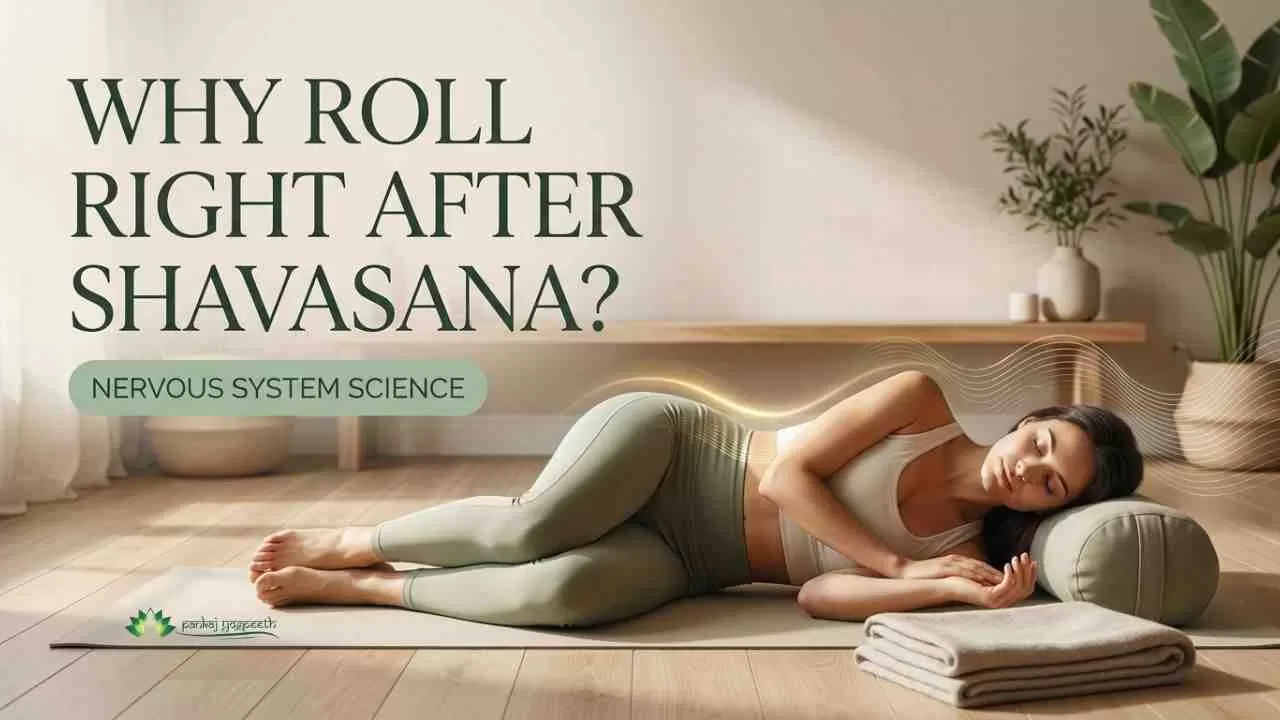
Roll onto your right. Your teacher says it gently, as if an afterthought, as the class stirs from silence. And perhaps you've followed it a hundred times without ever asking the obvious question, why the right? Why not the left?
Rolling to the right side after shavasana is one of those quiet rituals that practically every studio does, but few of us are ever informed what it's for. As it turns out, the explanation is much deeper than habit, right into your nervous system.
This guide walks you through just that: what's happening in your body in shavasana, why the right side became the tradition, how the side you chose changes your nervous system, and when rolling left is the smarter, sometimes safer move. The actual secret is not where your heart is at all. It all comes down to one nerve that runs from your brain all the way down to your gut.
What Happens to Your Nervous System During Shavasana?
Shavasana seems like the easiest pose in yoga; you're just lying there. But your body conducts some of its most important tasks quietly. This is an active shift within you, rather than "doing nothing". This is when the true advantages of shavasana begin. Here's what happens in shavasana, in simple language.
Meet Your Autonomic Nervous System: Sympathetic vs. Parasympathetic
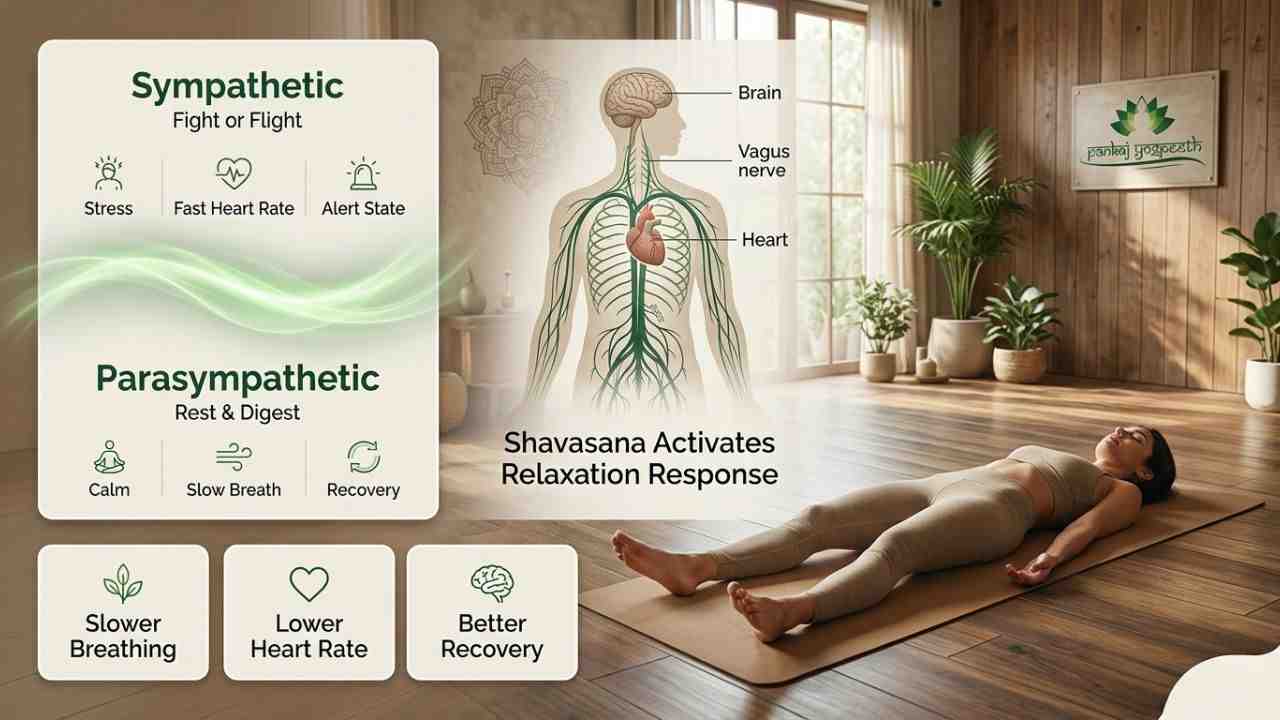
A part of you runs in the background, heartbeat, breath, digestion, without you ever thinking about it. "That's your autonomic nervous system, and there are two sides to it. One is the sympathetic side: "fight or flight," the gear that sends you up under stress. The other is the parasympathetic side, the "rest and digest," the gear that calms you. Most of us are living on the stressed side. Sympathetic vs. parasympathetic balance in yoga: Quiet goal: Tipping the balance toward calm
| Nervous system |
Sympathetic |
Parasympathetic |
| Nickname |
"Fight or flight" |
"Rest and digest" |
| Its job |
Revs you up |
Calms you down |
| Switched on by |
Stress, action, danger |
Stillness, slow breath, safety |
| What you feel |
Alert, tense, racing heart |
Calm, heavy, slow heartbeat |
| Role in shavasana |
Steps back |
Takes the lead |
Why Shavasana Tips You Into Parasympathetic Mode
This is where shavasana works its magic. When you allow yourself to fall into silence, your breathing and pulse rate slow, and your muscles relax. One by one, these impulses speak to your brain. You are safe. This is how shavasana activates the parasympathetic nervous system, and why it's so helpful for stress release and recovery.
The Vagus Nerve and Vagal Tone
One long nerve does all this calming job, the vagus, which runs from your brain all the way down to your gut. It's the body's primary gateway to relaxation, and it likes a slow, full exhale. Every long out-breath slowly increases something called "vagal tone." Even scientists can quantify this serenity in your heart rate variability, a simple sign of a calm, resilient nervous system.
So if your body goes this far into relaxation, how you come out of it is as important. Which gets us to the main question: why even roll to the side?
Why Do We Roll to the Side After Shavasana At All?
Now your body is totally relaxed, soft, effortless, totally settled. Now comes the adrenaline everybody wants, getting up.This is also when rolling to the side becomes more important than most people realise. Understanding why we roll to the side after shavasana comes down to two simple reasons.
1. How Rolling Protects Your Spine
Now your body is very calm, soft, slow, entirely settled. Then comes the time most people rush to. Getting up. And this is why rolling to the side is so much more important than it looks. There are two primary reasons we roll to the side after shavasana, one for your spine, one for your nervous system.
It feels natural to lie flat or sit up straight, but it’s terrible on your back. That motion uses your lower back and stomach muscles to pull your entire upper body up. It puts a lot of stress on your lumbar spine.
Rolling to one side first relieves that strain. Instead, you let your arms do the lifting and give yourself a gentle push-up.That’s the hidden value of side-lying after shavasana, it’s just the safer method for your spine to rise upright.
2. Sitting Up Too Fast vs. Rolling Gently
The second factor is about how you feel afterwards. Shoot up too fast, and your blood pressure drops for a second, that’s the dizziness or head rush you occasionally get. It also yanks you back into “alert” mode, destroying the peace you had created.Slow rolling avoids that jolt.
It’s a graceful handoff back to the world, and a key part of why a perfect shavasana departure technique helps yoga truly relieve stress and anxiety, rather than cutting the quiet short. Then it makes sense to roll to the side. But the true mystery is why it is always the right side?
Why Roll to the Right Side After Shavasana Specifically?
Here's the strange part. Rolling to the side makes it obvious, so why is it that almost every teacher, in almost every studio, says right? It's not random. There are three explanations for that one little signal, and they build on one another. Let's take them off one at a time.
Why Does Rolling Right Protect Your Heart?
Start with where things truly sit in you:
- Your heart is somewhat to the left of centre.
- Your left lung is a little smaller to make room for it.
- To the right sits your liver, your heaviest organ.
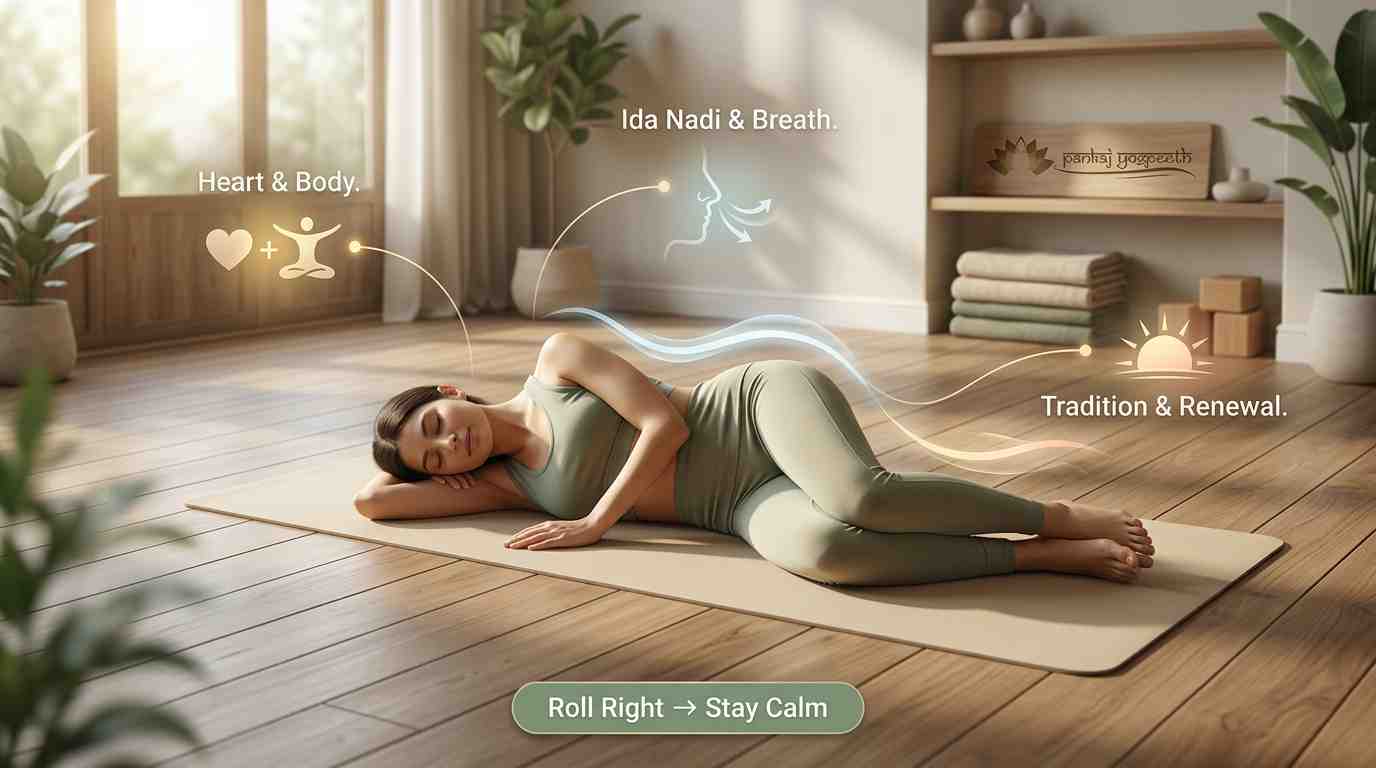
Roll onto your right side, and the heart is no longer pinned behind everything else. It rests above everything else, open and unpressed. Nothing pushes on it, so it merely ticks along in that steady post-shavasana cadence you just acquired.
But let me be honest: A couple of breaths either way will not disturb the heart of a sound body. It's the standard rationale, a nice one, but not the strongest. (The rare exception is someone born with mirrored organs, called situs inversus; for them, the left side is the calmer choice.) The actual power is in the breath.
The Breath Connection: Ida, Pingala, and Your Left Nostril
And this is when it gets interesting. Yoga describes the body as a network of energy channels called nadis. Here, two run the show:
- Ida (left side) - cool, calm, yin.
- Pingala (right) - warm, alert, yang.
Rolling right is supposed to wake up that chilly, relaxing left channel. And here's the trick that converts old wisdom into true science. Watch this sometimes: Lie on one side, and the lower nose gently closes as the upper opens. Thus, gently resting on your right side opens your left nostril.
| Energy channel |
Ida nadi |
Pingala nadi |
| Side of body |
Left |
Right |
| Quality |
Cool, calm |
Warm, alert |
| Energy |
Yin |
Yang |
| Linked to |
Calming (parasympathetic) |
Alerting (sympathetic) |
Studies show that breathing through your left nostril puts you in a soothing, parasympathetic state, while the right nose puts you toward alertness. So rolling right keeps you breathing on your "calm" side. The handshake of tradition and biology.
A Quiet Tradition: Turning Toward the Rising Sun
And there's a third layer, softer, more symbolic. When you enter a sacred place with your right foot or greet someone with your right hand, the right side of your body just means something good.
The rolling right is like turning toward the dawn, a little conscious manner of beginning fresh, peaceful and new.So each thread, body, breath and spirit pulls in the same direction: stay cool. But what if the last thing you need is peace?
Right vs. Left After Shavasana: How Each Shifts Your Nervous System
Every reason has led to the right answer so far. The side you choose, though, is really a switch, and you get to choose which way to turn it. It's easy to see the difference between the right and left sides after shavasana.
Does Rolling to the Right Side Calm You Down?
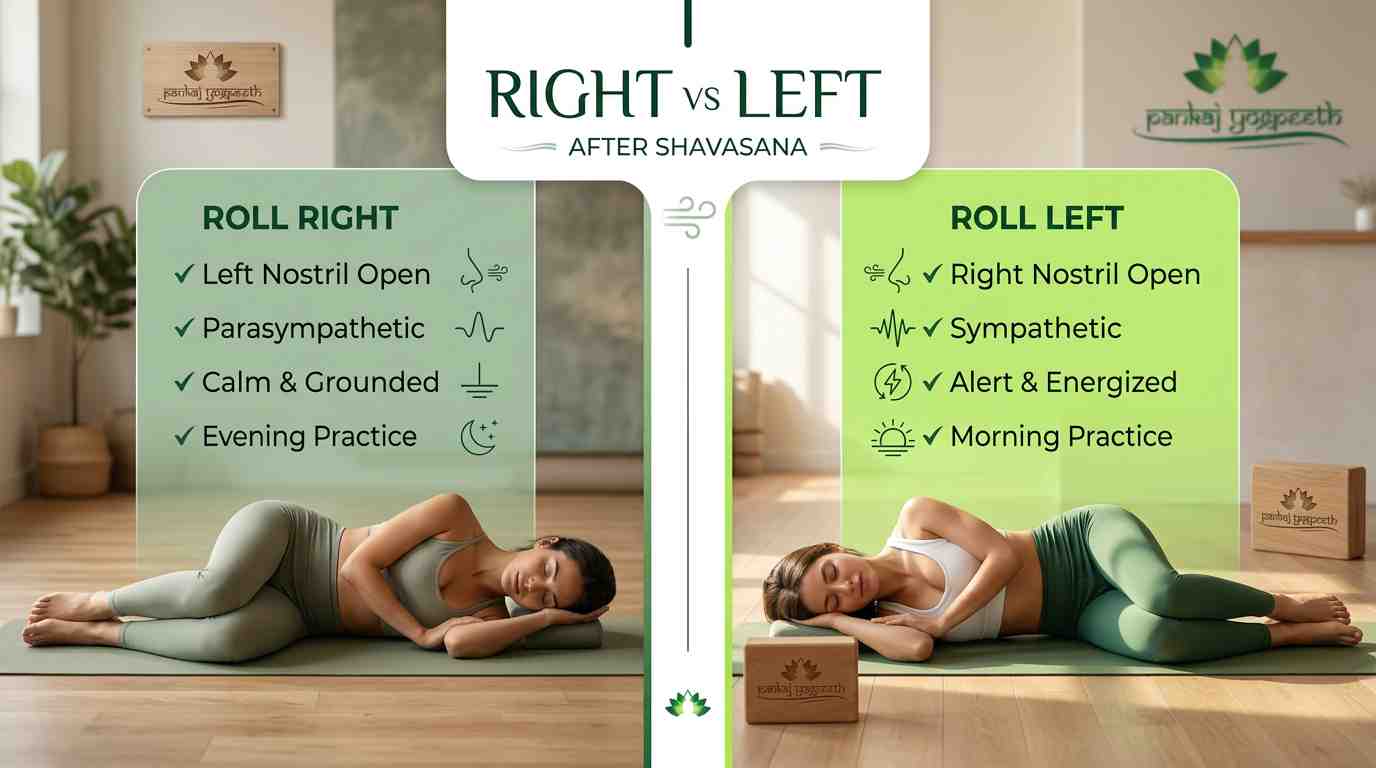
Yes. When you lie on your right side, your left nostril opens. This puts your body into a "rest and digest" state. It's the calm exit, great for restorative, yin, and evening classes when you want to leave feeling calm and soft.
Does Rolling to the Left Side Energize You?
Yes, too, but the other way around. You are more likely to be in a sympathetic, "get going" state when you lie on your left side. Because it's a gentle exit, you can do it in the morning when you're ready to start the day.
Right vs. Left at a Glance
| What changes |
Roll to the Right |
Roll to the Left |
| Nostril opened |
Left |
Right |
| Nervous system |
Parasympathetic |
Sympathetic |
| Effect |
Calming, grounding |
Energizing, alerting |
| Best for |
Evening, restorative, yin |
Morning, before a busy day |
Matching Your Exit to the Practice and Time of Day
As a general rule, choose an exit that leaves you with the mood you want.
- Slowing down the evening flow? Do not panic. Instead, roll to the right.
- Slow class in the morning before work? To get a little lift, roll to the left.
When you roll just once, your whole autonomic nervous system quietly shifts in one direction or the other. That brings up a question that many kids are afraid to ask out loud.
When Should You Roll to the Left Side After Shavasana?
So can you roll to the left side after shavasana? Yes, and it can be the wiser one sometimes. The "right side rule" is a good rule of thumb, not a hard-and-fast rule.
When Rolling to the Left Is the Better Choice
Some good reasons to switch sides: You want energy, not calmness. As we observed before, the left side wakes up the right nostril and a more alert, "go" state, perfect before a busy day. Anatomy mirrored. Remember situs inversus from earlier? If your organs are flipped, the left side is actually the nicer one for your heart. Comfort. If your right shoulder or hip just doesn't like that position, your body's vote counts too.
Why Pregnant Practitioners Need to Roll to the Left
For those who are pregnant, rolling to the left side following shavasana is the suggested option. Lying on the left increases circulation and takes pressure off a key vein (the vena cava) and the liver, which helps keep blood flowing steadily to the baby.
That said, every pregnancy is different, so be sure to check with your doctor or prenatal instructor to find out what's best for you. So the side is important. But what a lot of people misunderstand is that how you roll is just as important as which way.
How to Come Out of Shavasana Correctly: Step by Step
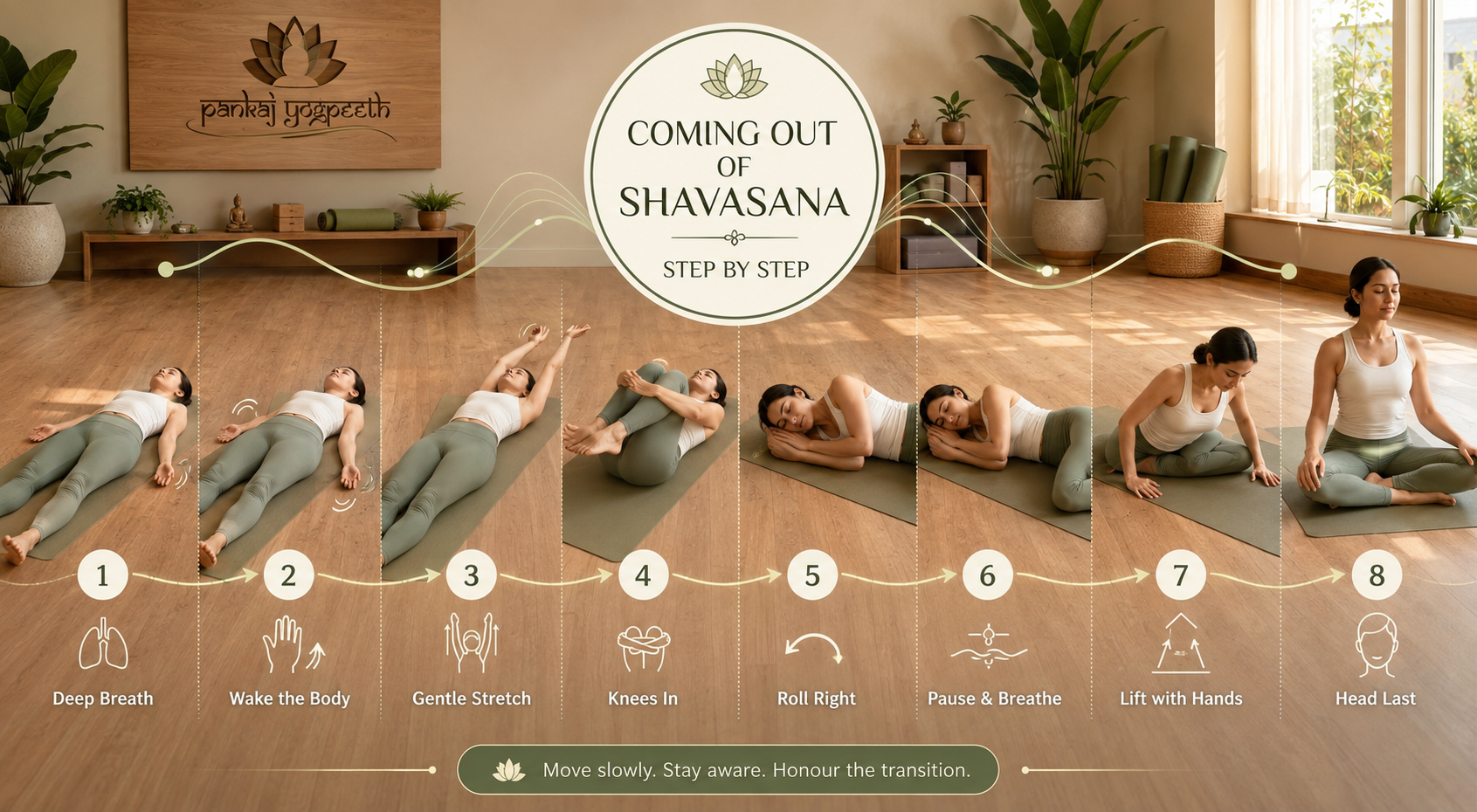
Now you know on which side and why. Here’s how to do it: the complete shavasana exit technique, from beginning to end. Here's how to end shavasana properly, one peaceful step at a time:
- Take a deeper breath. Take a few calm, deep breaths to show you’re waking up.
- Wake the edges. Gently wiggle your fingers and toes.
- Pull it! Stretch long across the whole body, arms raised.
- Put your knees in. Pull them gently to your chest.
- Roll onto your right side. There, curl loosely.
- Stop for a minute and breathe. Take some breaths to rest. Don't skip this.
- Lift on your hands. Your back doesn’t lift you; your arms do.
- Let your head come up last. Always the last thing to rise.
Common Mistakes When Exiting Shavasana
All the normal mistakes will ruin what you just built:
- Sitting bolt upright. As we saw, this puts strain on your lower back.
- Expanding rapidly. That’s the head rush. Your neurological system is springing back into alert mode.
- The side-roll or the hesitation. Rushing out breaks the peace in two. Take it easy. The soft finish is the whole point.
Once you slow down this final step, that quiet cue, "roll to your right", stops being a mystery and starts to make perfect sense.
So, Why the Right Side? Now You Know
So there you have it. Rolling to the side protects your spine and slowly brings your nervous system back into the world. Roll to the right, and you open the left nostril for calm; roll to the left, and you open the right for vitality, the kinder choice, too, for reversed anatomy or pregnancy.
Next time, do it with purpose. Notice the side, the open nostril, the soft shift toward calm.When you stop moving, Shavasana is not finished. It is finished in the way you softly come back. That's the silent beauty of yoga and the neurological system. Even the smallest signal is a deep care.
Want to Understand the Why Behind Every Pose?
If you’re excited by this kind of detail, the science and the soul together, that’s what profound yoga study is all about. At Pankaj Yogpeeth, we go well beyond the poses in our Yoga Teacher Training courses, into the anatomy, breath and philosophy that give every instruction its meaning. Whether you are looking to teach with confidence or enhance your personal practice, there is a way for you here.