

Take a moment and notice your breath. Feel how it moves, slow and even, through your nose. Hidden within that quiet flow is something the old yogis understood deeply.
They called it the ida nadi, a subtle channel of energy that runs along the left side of your body. It is cooling and calm, much like the moon's light. And when this ida nadi is active, something within you begins to shift. The mind grows still. The breath slows. The emotions settle, the way water turns clear once it is no longer stirred.
This calm is not something you must search for. It already rests inside you, waiting in your breath. Here, you will see how an active Ida nadi can calm the mind and ease the heart. Let us begin with the channel itself.
What Is Ida Nadi and Why Is It Called the Moon Channel?
The yogis saw the body not only as flesh and bone, but as a living map of energy. Through it run countless nadis [subtle energy channels] that carry prana [life-force breath]. The study of these channels, known as nadi yoga, sits at the root of the tradition. Three matter most: Ida, Pingala, and Sushumna.
The ida nadi is the left channel, cool, quiet, and turned inward. Like the moon, it casts a soft calm over your inner world, which is why it is called the moon channel. Pingala, its partner, is the warm, solar channel on the right. This balance of ida and pingala forms the heart of Hatha Yoga, the same lineage we teach at Pankaj Yogpeeth in Rishikesh.
Where Does Ida Nadi Flow in the Body?
The ida nadi begins at the base of the spine. From there, it rises along the left side, crossing each energy centre, until it ends at the left nostril. This is why the left nostril is the doorway to ida. When your breath moves freely through it, the moon channel is awake within you.
| Aspect |
Ida Nadi |
| Side of Body |
Left |
| Symbol / Nature |
Moon, cooling, feminine |
| Element Quality |
Calming, receptive |
| Active Nostril |
Left |
| Governs |
Mind, emotions, and rest |
Knowing where Ida lives is one thing. Sensing when it is awake is another.
How Do You Know if Your Ida Nadi Is Active?
You do not need any tool to sense the ida nadi. Your own breath will tell you. The signs are subtle but clear once you learn to notice them: a softer breath, a slower pace, a mind that has stopped racing. These are the signs the ida nadi is active within you:
- Breath: the left nostril flows more freely.
- Mind: calm, reflective, and quiet.
- Emotions: soft, steady, and content.
- Body: cooler, relaxed, and restful.
- Energy: turned inward and restorative.
There is a simple self-check the yogis have always used. Bring a finger beneath your nose and breathe naturally. Feel which nostril the air moves through more freely. If the left side flows more easily, your moon channel is open, and a quiet, restful energy is guiding you.

Which Nostril Tells You Ida Is Active?
The left nostril is the doorway to Ida. So if you pause and find your breath flowing more freely on the left, this is your answer. There is no wrong reading here. Throughout the day, the dominant nostril shifts, and so does your energy. Simply noticing which nostril is active right now is the first step toward working with your own breath. So the moon channel is awake. But what is it truly doing for your mind and heart?
How Does an Active Ida Nadi Calm Your Mind and Emotions?
Here lies the real gift of the moon channel. When the ida nadi is active, it speaks to the part of you that knows how to rest, what science calls the parasympathetic nervous system [the body's rest-and-restore mode]. This quiet system slows the heart, softens the breath, and tells the body it is safe.
When breathing through the left nostril activates the system. As the breath flows on the left, racing thoughts loosen, the heartbeat eases, and the tight grip of emotion lets go. This is how the ida nadi calms the mind, not by force, but by guiding the body back into rest.
In everyday life, the ida nadi is helpful in many ways:
- A more stable heart that beats more slowly and calmly.
- A mind that is less cloudy and has fewer racing thoughts.
- The kind of feelings that move through you and then go away
Why Does Ida Nadi Soothe Anxiety and Overthinking?
Anxiety often feels like heat, a mind that runs too fast. The ida nadi answers with coolness. As its lunar energy rises, the loops of worry slow and the body cools. This is why left nostril breathing for anxiety is taught to those carrying an overthinking mind. It does not fight the worry. It simply draws you back to the quiet shore of yourself.
To fully understand this calm, it helps to meet Ida's fiery opposite, Pingala.
What Is the Difference Between Ida and Pingala Nadi?
If Ida is the moon, then Pingala is the sun. Where ida cools and calms, pingala warms and stirs you into action. One draws you inward to rest; the other moves you outward to do. This is the heart of the difference between ida, pingala, and sushumna, two opposite currents, and a third that holds them both.
Neither channel is better than the other. A life of only calm grows heavy, and a life of only fire burns out. The aim is not to choose, but to bring ida and pingala into harmony. When both settle, the central channel, sushumna, awakens, the sacred path of stillness and meditation.
What Happens When Ida and Pingala Are in Balance?
When the moon and sun flow within you in equal measure, something rare appears. The mind grows clear. The breath moves evenly through both nostrils. There is ease, neither restless nor dull. This balance is the doorway to sushumna, the quiet state the yogis spend years seeking. Learning how to balance ida and pingala through the breath is one of the first gifts of a steady practice.
| Quality |
Ida |
Pingala |
Sushumna |
| Nature |
Moon, cooling |
Sun, heating |
Central balanced |
| Side |
Left |
Right |
Centre |
| Effect |
Calms and relaxes |
Energises and activates |
Awakens and unites |
| Nostril |
Left Right |
Both |
flow evenly |
| Best For |
Rest and emotional balance |
Action and focus |
Meditation and higher awareness |
So how do you invite Ida to flow when you need its calm?
Which Breathing Techniques Activate the Ida Nadi?
The beautiful truth is that you can invite the moon channel to flow whenever you wish. It's all about the breath. There are some easy things you can do to open up your ida nadi and call on its calmness, even on busy days.
Left nostril breathing is the most gentle way to start. Many people then move on to Chandra Bhedana, also known as "moon-piercing breath," a breathing technique that brings cool energy in through the left side. When students study pranayama at Pankaj Yogpeeth, they learn these ways to calm down through breathing exercises. As part of this, they learn to feel the breath move through their bodies.
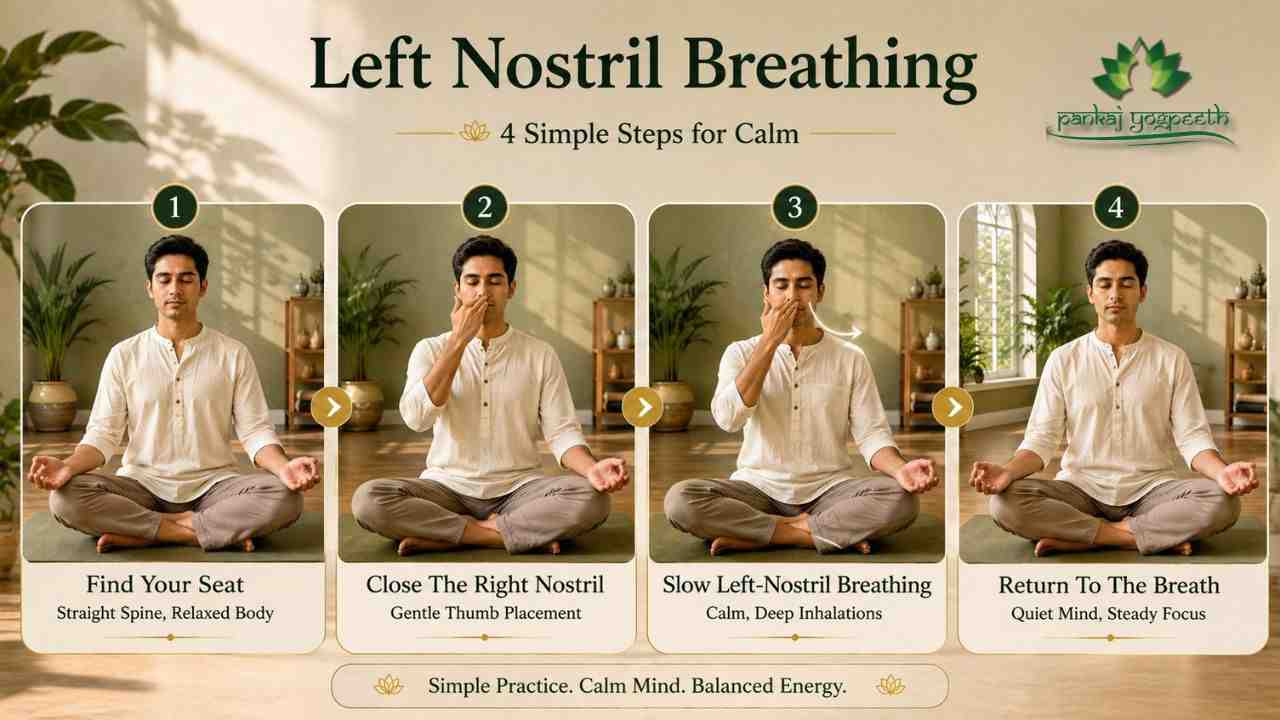
How Do You Practise Left Nostril Breathing for Calm?
- Find a place that's easy on the back and stretch out your spine.
- Slowly close your right nostril with your right thumb.
- For some quiet time, breathe slowly and fully through your left side.
- If your mind wanders, just bring it back to the left-flowing breath.
You don't need to push anything. After a few rounds, even a beginner will feel calm. Once you're used to breathing through your left nose, these other cooling pranayamas can help you feel even calmer:
| Technique |
How It Works |
What It Calms |
| Chandra Bhedana |
Inhale through the left nostril and exhale through the right nostril |
An overheated, busy mind |
| Nadi Shodhana |
Alternate nostril breathing performed slowly and steadily |
Emotional imbalance and mental restlessness |
| Sheetali |
Cooling breath with the tongue curled into a tube shape |
Anger, irritation, and excess heat |
The benefits of Chandra Bhedana and these cooling breaths grow with practice. But what happens when IDA flows too much, or too little?
What Happens When Your Ida Nadi Is Out of Balance?
Like the moon, the ida nadi moves through phases, and there is no need to fear this. But when the balance tips too far one way, your body and mood begin to show it. You may feel heavy and tired, or restless and overheated; these ida nadi imbalance symptoms are simply your body asking for gentle help.
The remedy lives in your breath. Learning how to balance ida and pingala is not about doing more. It is about noticing which way you have leaned, then breathing to bring yourself back to centre.

Can Too Much Ida Nadi Make You Feel Low?
Yes. A lot of the time, we think that quiet is good, but too much of the moon's energy can make things heavy. The silence turns into tiredness, and it's hard to start the day. When this happens, a little of Pingala's warmth brings back your spark and the benefits of the Ida nadi.
| State |
How You Feel |
What Helps |
| Balanced |
Calm yet alert |
Maintain a regular yoga and breathing practice |
| Overactive Ida |
Sluggish, low energy, mentally foggy |
Add Pingala-activating practices such as Surya Bhedana (sun breath) |
| Underactive Ida |
Restless, overheated, anxious |
Practice left-nostril breathing and other calming techniques |
So how do you keep this calm flowing through your days?
How Can You Keep Your Ida Nadi Active for Lasting Calm?
You don’t get lasting calm in one go. It starts with small, steady habits. Going back to your breath every day, even for just a few minutes, is the easiest way to keep the ida nadi active. If you feel the world is too loud, try left-nostril breathing to quiet your mind.
The way you spend your day is also important. Slow down a bit and rest when your body tells you to. Make pranayama for calm a small part of your daily life until learning how to open the ida nadi is no longer a method but a way of life.
If this quiet science speaks to you, there is more to discover. The deeper study of nadi yoga, breath, and meditation often unfolds best in person; many seekers find their way to a Yoga Teacher Training in Rishikesh, where the nadis and pranayama are taught beside the Ganga. Wherever your path leads you, may your breath always guide you home to peace.