

There are mornings when you wake already alert, mind quick, body warm, ready to move. And there are moments when that same energy turns restless, when you cannot sit still. In both, something within you has stirred. In yoga, this stirring has a name: the pingala nadi, the sun channel or surya nadi. There are mornings when you wake already alert, mind quick, body warm, ready to.
So what happens when the pingala nadi is active? It impacts everything: your breath, your mood, your focus, even the way you think. This guide will teach you what an active pingala feels like, how it impacts your emotions and your brain, and how to work with it.
But before any of that, one question is worth sitting with: why does this single current hold such power over your whole day?
What Is the Pingala Nadi in Yoga, and Why Does It Matter?
The pingala nadi holds such power because it is one of the three main energy channels, what yoga calls nadis, that carry your life force, or prana, through the body. Think of nadis as quiet rivers of energy moving inside you, of the many, three matter most: ida, pingala, and sushumna. The pingala nadi is the sun channel, or surya nadi. It is warm, active, and bright. When it flows, you feel awake, ready, and alive. You do not need to see this channel to know it; you feel it every time your energy rises on its own.
Where does the pingala nadi begin and end in the body?
Like all three main channels, the pingala nadi begins at the base of your spine, at the root centre, which yoga calls muladhara. From there, it rises upward, moving along the right side of the spine, and ends at your right nostril. This is why the right side of the body and the right nostril are closely associated with pingala. When this channel is open, your right nostril often breathes more freely than the left.

How is the pingala nadi different from the ida and sushumna nadis?
The three channels are like sisters, yet each has its own nature. Pingala is the sun, warm and active. Ida is the moon channel: cool, calm, and restful, flowing along the left side. Sushumna is the middle way, the channel of balance and peace. When we see that Ida and Pingala are in harmony, energy can begin to rise in Sushumna.
The simple chart below shows how these three differ at a glance.
| Nadi |
Energy & Symbol |
Side / Nostril |
Core Quality |
Nervous System Link |
| Ida |
Moon (Chandra), cooling |
Left side / left nostril |
Calm, emotional, restful |
Parasympathetic nervous system (rest and recovery) |
| Pingala |
Sun (Surya), heating |
Right side / right nostril |
Active, alert, energetic |
Sympathetic nervous system (action and response) |
| Sushumna |
Central fire, balance |
Centre / both nostrils flowing |
Stillness, awareness |
Balanced nervous system state |
In short, ida cools you, pingala fires you, and sushumna brings the two into peace. But to know the pingala nadi by name is only the first step. The deeper knowing comes when you feel it stir within you. So let us look at what this channel is and what it awakens within your own body.
What Happens in the Body When the Pingala Nadi Becomes Active?
When the pingala nadi becomes active, you feel it before you can name it. A soft warmth begins to rise. Your breath grows fuller through the right nostril. Your energy sharpens, your mind turns outward, and your body readies itself for action. Yoga calls this the "go" mode, the same state your body enters when it prepares to move, work, or respond. In simple words, the sun within you has risen, and you are awake and ready. There is nothing wrong with this. It is simply Pingala doing its work.
How do you know if your pingala nadi is active right now?
You do not need special training to notice this. Take a moment to breathe and feel. Here are some simple signs to tell if a pingala is alive:
- It's easier to breathe through your right nose because it feels more open.
- Your heartbeat feels a little faster, and a light warmth spreads through your body.
- Your mind is awake and focused on the outside world.
- You are ready to act, not rest.
If this sounds like you right now, your pingala nadi is in charge. The table below gathers the signs of an active pingala in a single view, along with what this energy serves best.

| Area |
What You Notice |
| Breath |
Right nostril flows more freely |
| Body |
Warmth, increased energy, and a faster heartbeat |
| Mind |
Sharp focus and readiness for tasks |
| Mood |
Confidence, drive, and sometimes restlessness |
| Best For |
Exercise, work, eating, and problem-solving |
When most of these are true, you are in your sun hours, bright, driven, and made for action. But this energy never stays in the body alone. Sooner or later, you feel it in your heart too, in your mood, your patience, the way you meet each moment. So, let us see how an active pingala shapes your feelings.
How Does an Active Pingala Nadi Affect Your Emotions and Feelings?
Your feelings and your energy go together. Because the pingala nadi is your active channel, it shapes how you feel each day. When we talk about the pingala nadi and emotions, balance is the right place to begin. When pingala is balanced, this energy supports you. You may notice that you feel:
- Motivated and ready to begin your work.
- Confident in yourself and your choices.
- Courageous, willing to act and to try.
- Warm, alert, and full of life.
This is the healthy and helpful side of pingala.
Can an overactive pingala nadi make you feel restless or angry?
Yes, it can. When the pingala nadi stays active for too long, the common overactive pingala nadi symptoms begin to show.
- You may feel restless, unable to sit still or slow down.
- Irritable, with a quick temper.
- Tense or overheated for no clear reason.
- Anxious, with thoughts that will not rest
This is how the link between the pingala nadi and anger manifests. But there is no need to worry. This is not a problem with you. It is only energy that has gone out of balance, and balance can return with a little care. So the aim is not to remove this energy, but to keep it steady and calm.
And your emotions do not stand alone. When your feelings change, your thinking changes too. Let us look at how an active pingala affects your mind.
What Does an Active Pingala Nadi Do to Your Brain and Mind?
Have you ever felt your mind is sharp and clear some days, and answers come easily? On those days, the pingala nadi is awake within you. In yoga, we understand pingala to be associated with the left side of the brain, the side that governs logic, planning, and words. So when this channel is active, your thinking becomes clear. Your thoughts fall into order, and you can focus, decide, and act with ease. This is the bright gift of the pingala nadi and the brain, and you are right to welcome it.
This alert, ready feeling rises from what science calls the sympathetic nervous system (your body's "ready to act" system). It keeps the mind awake and attentive. For your study, your work, or any task in front of you, this is a real blessing.
Why does the pingala nadi sharpen focus but tire the mind?
Let me share something simple with you. The same energy that sharpens your focus also keeps your mind from resting, and a mind that never rests will, in time, grow tired. When the pingala nadi and left brain stay awake too long, you may find that thinking becomes harder, and that you feel weary even while sitting still. This is why Surya Nadi, the sun within the mind, is meant to rise and then set, not to burn through the whole day.
See for yourself how an active pingala touches your thinking:
| Brain / Mind Function |
Effect of Active Pingala |
| Focus |
Sharper, task-oriented attention |
| Logic & Analysis |
Left-brain thinking becomes stronger |
| Alertness |
Increased awareness and readiness for action |
| Decision-Making |
Faster, more action-driven responses |
| Rest & Calm |
Reduced; the mind may find it harder to settle and relax |
When you respect its rhythm, this is a bright and capable mind. When you push it without rest, it slowly tires.
So a natural question now comes: not whether pingala is good or bad, but when it should rise and when it should rest. Let us look at that together.
When Should the Pingala Nadi Be Active, and When Should It Rest?
There is an old and beautiful science in yoga called swara yoga, the study of the breath and its rhythm. It teaches what your own body already knows: the pingala nadi is not meant to flow all the time, but at the right times.
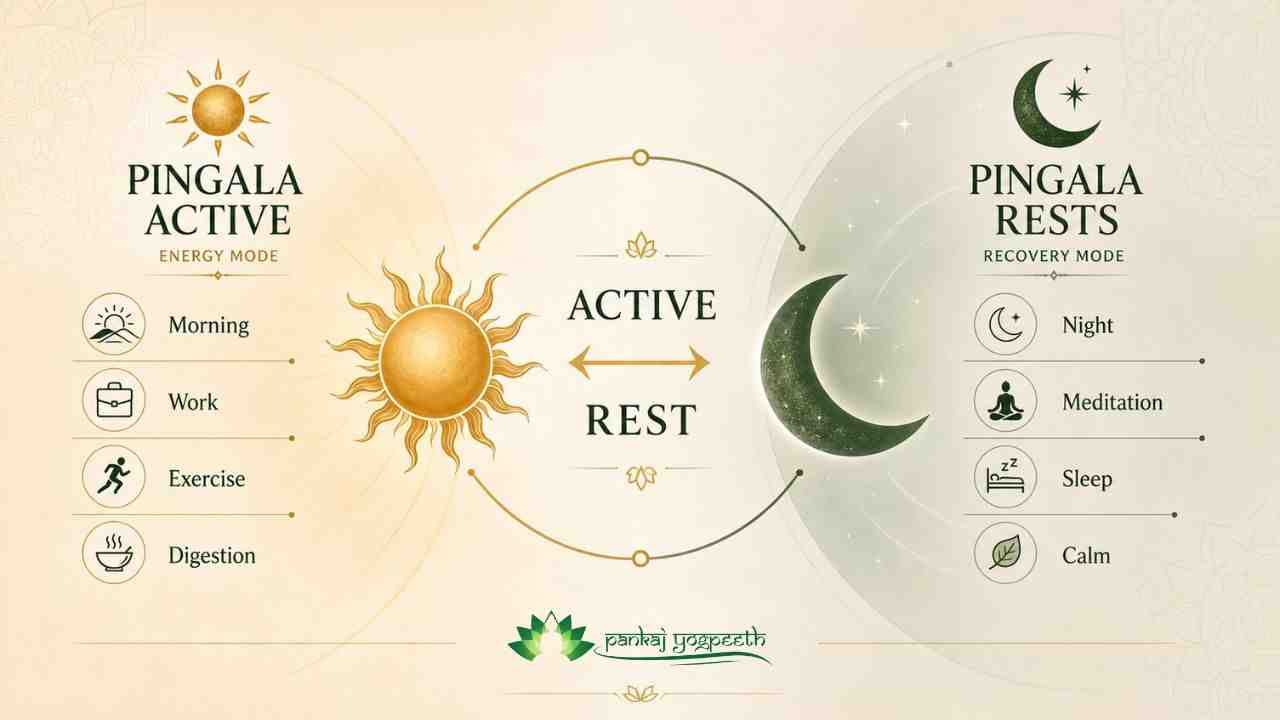
So when is the pingala nadi active, and when should it be? Pingala serves you best in your waking hours, such as:
- In the morning, as you rise and begin your day.
- At work, when your task needs focus and clear thinking.
- During exercise, when the body must move with energy.
- At mealtimes, it helps you digest your food
In these moments, this warm energy is truly your friend. But there are times when pingala has to retreat and let its sister, ida, take control:
- At night, you want to rest and sleep.
- In meditation, you want the mind to quiet down.
If pingala stays awake, then calm does not come easily.
Is it good or bad to keep the pingala nadi active all day?
Neither good nor bad, only out of place. Keeping the pingala nadi active all day is like asking the sun to stay at noon forever. The sun is not wrong; it is meant to set as well as rise. So the teaching here is not to suppress pingala or to fear it. It is rhythm. When you give pingala its hours and ida its hours, you are truly balancing ida and pingala, and in that balance, real health and peace are found.
And here is the good news: this rhythm is not something that simply happens to you. It is something you can guide yourself with a few simple practices. Let me show you how.
How Can You Naturally Activate or Calm the Pingala Nadi?
The most direct way to work with the pingala nadi is through the breath, so breath and energy move together. These are easy, normal things to do. Let us show you how to naturally activate the pingala nadi and calm it when it rises too high.
How do you activate the pingala nadi through right nostril breathing?
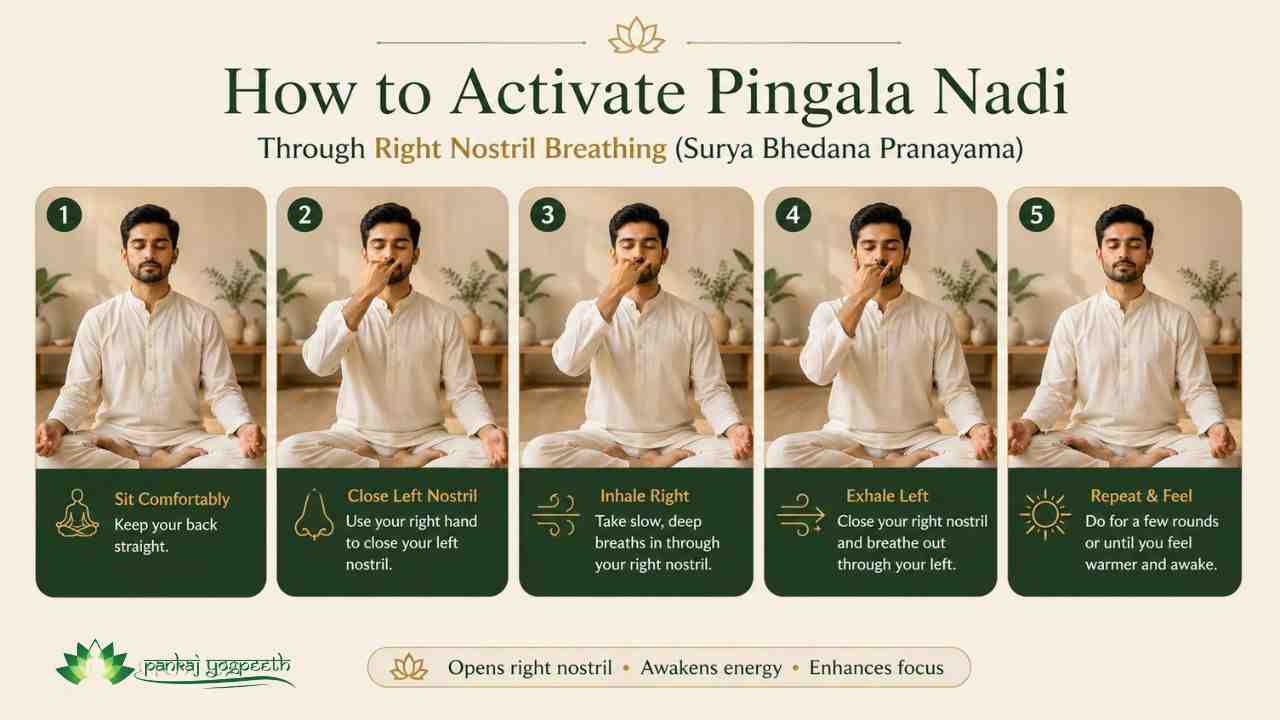
How do you activate the pingala nadi through right nostril breathing? To wake your pingala, you turn to the right nostril, for that is its doorway. If you have ever wondered what kind of breathing opens the pingala nadi, it's called surya bhedana pranayama, which means "sun-piercing breath." It's easy to do, and you can follow these simple steps:
- Take a seat that feels good and keeps your back straight.
- Use your right hand to close your left nostril.
- Take slow, deep breaths in through your right nose.
- Close your right nostril and breathe out through your left.
- Do this for a few easy rounds, or until you feel warmer and more awake.
Lying on your left side does the same, opening the right nostril on its own. These are the real benefits of right nostril breathing: clear, ready energy in the morning or before any task that requires focus.
Which yoga practices help balance pingala with ida nadi?
But our aim is rarely to push pingala higher. More often than not, we wish for balance. Many seekers ask how to calm an overactive pingala nadi, and the way is to reverse the breath: chandra bhedana (moon-piercing breath, through the left nostril) brings calm and softens the mind.
And the loveliest of all is nadi shodhana (alternate-nostril breathing), breathing through one nostril, then the other, in turn. This is the heart of balancing the ida and pingala nadis, bringing your two channels into harmony for meditation and stillness.
Here are these practices, gathered for you:
| Practice |
What It Does |
When to Use |
| Surya Bhedana (Right-Nostril Breathing) |
Activates Pingala and increases energy |
Morning or before physical activity |
| Lying on the Left Side |
Encourages the right nostril to open |
When feeling sluggish or low on energy |
| Chandra Bhedana (Left-Nostril Breathing) |
Calms Pingala and cools the mind |
Evening or when feeling overheated |
| Nadi Shodhana (Alternate-Nostril Breathing) |
Balances Ida and Pingala |
Before meditation or when seeking balance |
| Sushumna Awareness |
Brings both energy channels into harmony |
Before deep meditation or advanced yoga practice |
The breath is simple, yet powerful, and best learned with care. If you are new to pranayama, or if you live with high blood pressure or anxiety, or are expecting a child, move slowly and seek guidance. At Pankaj Yogpeeth in Rishikesh, our experienced gurus teach these practices step by step so that you may follow them safely. If your heart feels called to learn more deeply, you are always welcome with us.
For now, you need nothing more than this. Sit for a moment and notice your own breath. Feel which nostril flows more freely right now. In that small act of noticing, you have already begun to know your pingala nadi.
How Pankaj Yogpeeth Can Help You Find Balance Within
The pingala nadi is not something to fear or to fight. It is the warm, bright energy that helps you rise, act, and meet your life with strength. You have seen how it touches your body, your emotions, and your mind, and how, like the sun, it is meant to rise and to rest in its own time. The real gift is never an active pingala or a calm ida alone, but the balance held between them.
This balance is a path, and a path is easier to walk with a guide beside you. At Pankaj Yogpeeth in Rishikesh, our gurus have spent their lives learning these subtle channels and the breath that moves them. Through our yoga and pranayama teachings, we help seekers like you come to know your own energy and to practise with care, safely and from the root.
If your heart wishes to learn more deeply, the door is always open. Begin where you are, with a single breath, taken in awareness.