
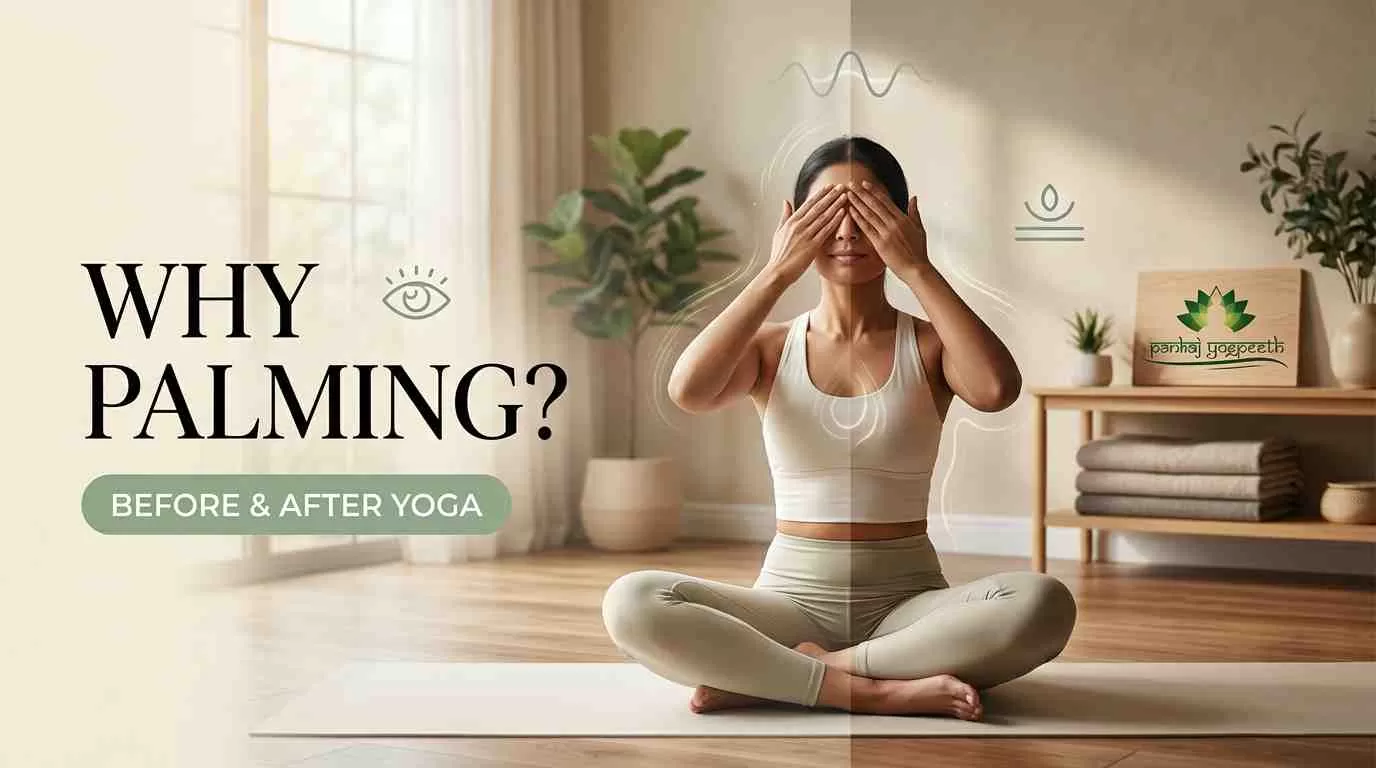
"Rub your palms together until they're warm, then cup them gently over your closed eyes." You've heard your teacher say that when class started and when it ended. And maybe, beneath your heated palms, you have secretly wondered: what is this small gesture for?
So why is palming important before and after a yoga class? It turns out it's more than a filler. In yoga, palming is a type of threshold ritual, a little pause to rest tired eyes and quiet the mind at each end of your mat.
This guide explains it: the science behind eye palming, where the technique originated, and exactly how to do it for the most calm and stress reduction. This little period of darkness does something unexpected and softly changes your nervous system, quietly changing the practice on either side of it.
What Is Palming in Yoga?
It's one of the simplest practices you'll ever learn. You rub your palms together until they are warm, close your eyes, and cup those warm palms softly over them, resting in soft, pleasant darkness for a few moments. That's all. No props. No flexibility. No work. Nothing but warmth and darkness and a moment of silence.
Is Palming a Yogic Eye Exercise?
Yes. Palming is a traditional yoga eye exercise, generally taught alongside other eye movements (also called netra exercises) and associated with the peaceful, restorative aspect of practice. Teachers use it in two ways: To focus students at the start of class, and to calm them down at the end. One of the oldest, most pleasant relaxation techniques in yoga and one of the easiest to get right.
Why Warm Palms Soothe Tired Eyes
It's the miracle of two little things working together.
- First, massaging your hands generates some modest warmth, which helps the eyes and the little muscles around them relax.
- Secondly, when you cup your palms, you make darkness, no light, no constant staring.
One thing to note: you cup, not press. Your palms hover gently above the eye sockets, never pushing the eyeballs themselves. That lovely warm darkness is what makes eye palming so good for resting the eyes and reducing strain.
That sounds simple, but something real is occurring under those hands. So what is it?
What Happens to Your Body During Palming?
This is where that simple gesture becomes fascinating. As soon as your warm hands rest on your eyes, your body gently shifts gears, slowing down, softening, and turning its attention inward. It looks like nothing, but there is a huge change underneath.
How Does Palming Relax the Nervous System?
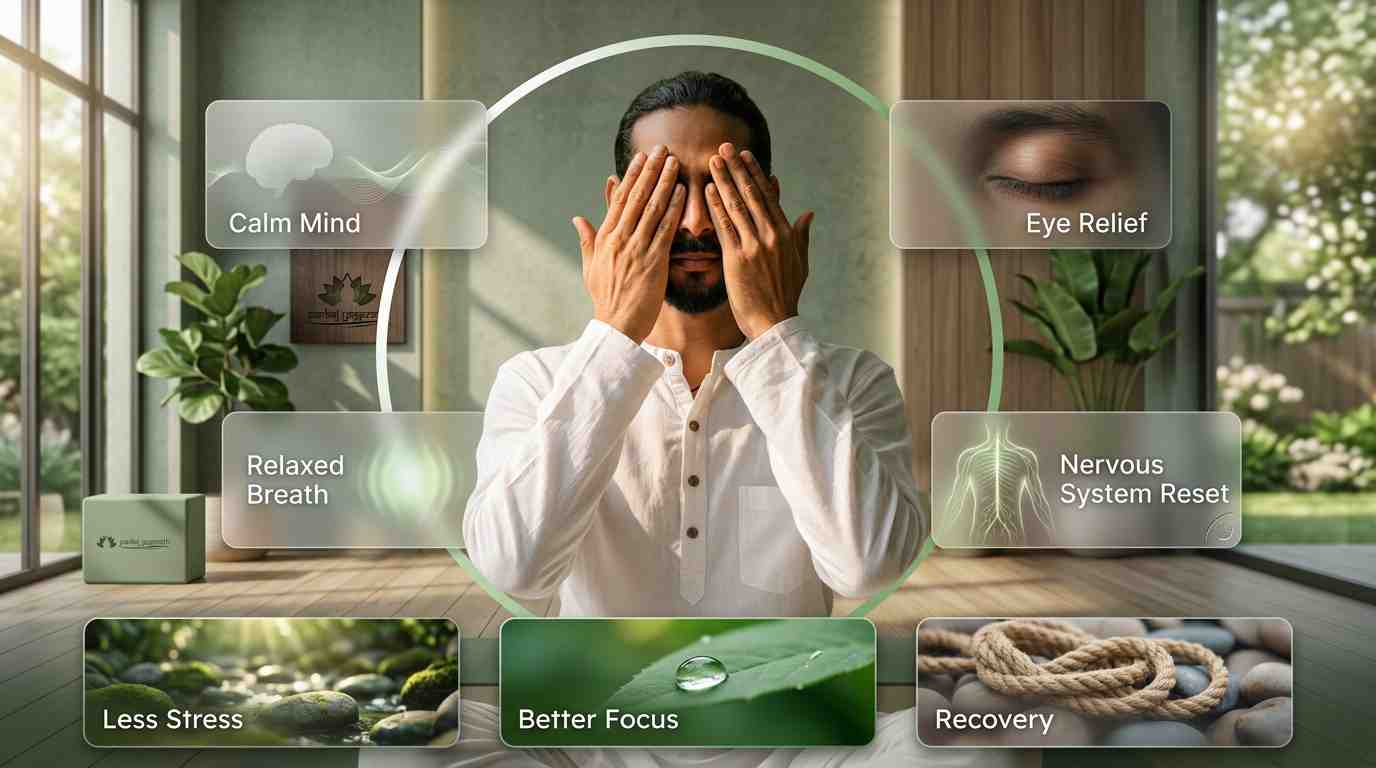
Your eyes work all day long, providing a steady stream of signals to your brain. Covering them in warm darkness slows down that stream of input, and your body takes that reduction in stimulation as a signal to settle down.
Neurological models suggest that light-blocking (known as photic occlusion) is linked with reduced sympathetic "fight or flight" activity. However, clinical measurements reveal little tendency towards the relaxing parasympathetic "rest and digest" state. One honest note: that peace is from warmth, darkness and less stimulus, not from pushing on your eyes. You keep them. That is what makes palming a quiet and reliable stress reliever.
Why Darkness Helps Screen-Strained Eyes
Most of us spend hours staring at devices, and palming is a genuine reprieve for those tired eyes from blue light and visual overload. Research shows it may reduce the small focusing strain (accommodative microfluctuations) that accumulates over a long screen day. To be clear, though, palming lowers strain, it won't modify your prescription or cure short- or far-sightedness.
What Are the Benefits of Palming in Yoga?
So what does it all mean? Here are the primary benefits of palming in yoga at a glance:
| Benefit |
What it helps with |
| Calms the nervous system |
Stress and tension relief |
| Rests the eyes |
Eye strain and screen fatigue |
| Quiets the mind |
Focus and concentration |
| Soothes and warms |
Better wind-down and rest |
Why Is Palming Important Before a Yoga Class?
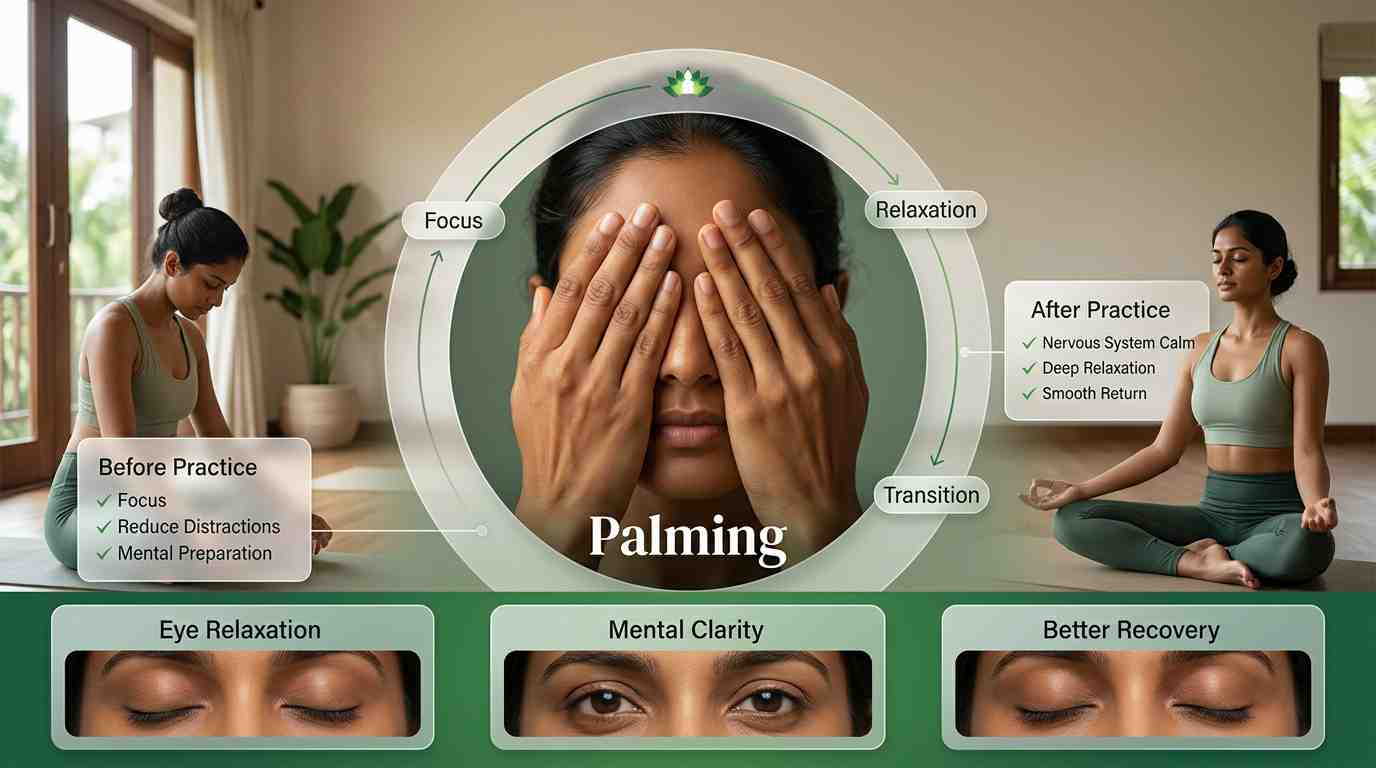
Most of us don't come to the mat calm. We run in from traffic, work, one final look at the phone, bodies here, brains scrolling. That's the main reason why palming is so important before yoga. When it's first quiet, it does these things:
- It separates us from the rest of the world. Screens, noise, the to-do list, and palming provide your eyes and brain with a clean, dark break, a gentle hint that practice begins now. This small change is a major reason teachers utilise palming at the beginning of class.
- It sharpens focus, sets your intent. In that calm darkness, the mind chatter settles, and the concentration gathers. You get a minute to decide how you want to practice before the very first asana, which is why palming is so useful for focus and concentration.
- It prepares the eyes and the mind for what is to come. Relaxed eyes + a stable mind = a smoother overall practice. This is the importance of palming before asanas: you begin from calm, not from chaos.
- It makes it easy for pratyahara. This is the yogic idea of the turning of the senses within. Palming begins that inward turn by softly shutting off sight, very useful before meditation or trataka.
So, before class, palming helps you get present, focused, and ready. But if palming gets you in, it does something just as valuable when you get out.
Why Is Palming Important After a Yoga Class?
You're done with the work by the end of class. Your mind is quiet, your body is warm to the touch. There's a chance you'll lose it all the moment you pick up your phone. That's why palming after a yoga class is a good idea: it helps you keep the peace you just learned. Here's what it does as you close your practice:
- It calms you down and ends the practice. Palming is a gentle way to cool down that keeps you from being distracted. This way, the peace of your session stays with you instead of slipping away. This is one of the easiest ways to cool down after yoga. It tells your body that the work is done and it can rest.
- It makes you feel even calmer right after shavasana. When you come back to the room, palm-pressing goes well with corpse pose because it slowly spreads heat around the body and calms the nervous system. If you've ever thought about why we roll to the right after shavasana, palming is the next step that makes sense in the same careful way.
- It helps you get back to normal life. This is the importance of palming after yoga: it creates a soft link between the mat and the rest of the world. After taking a few deep, warm breaths, you can go about your day without jumping right back into "go" mode.
That's also why palming is often done right at the end of class: it keeps everything you learned safe. Now that you know when and why, it's time to talk about how. This is the part that almost everyone gets wrong.
How to Do Palming in Yoga: Step by Step
Palming is easy and appears easy, but a few minor details make it relaxing rather than just a way to kill time. Here is the complete yoga palming technique from when you sit down to when you open your eyes. The first few times, do it slowly, and it will eventually feel automatic.
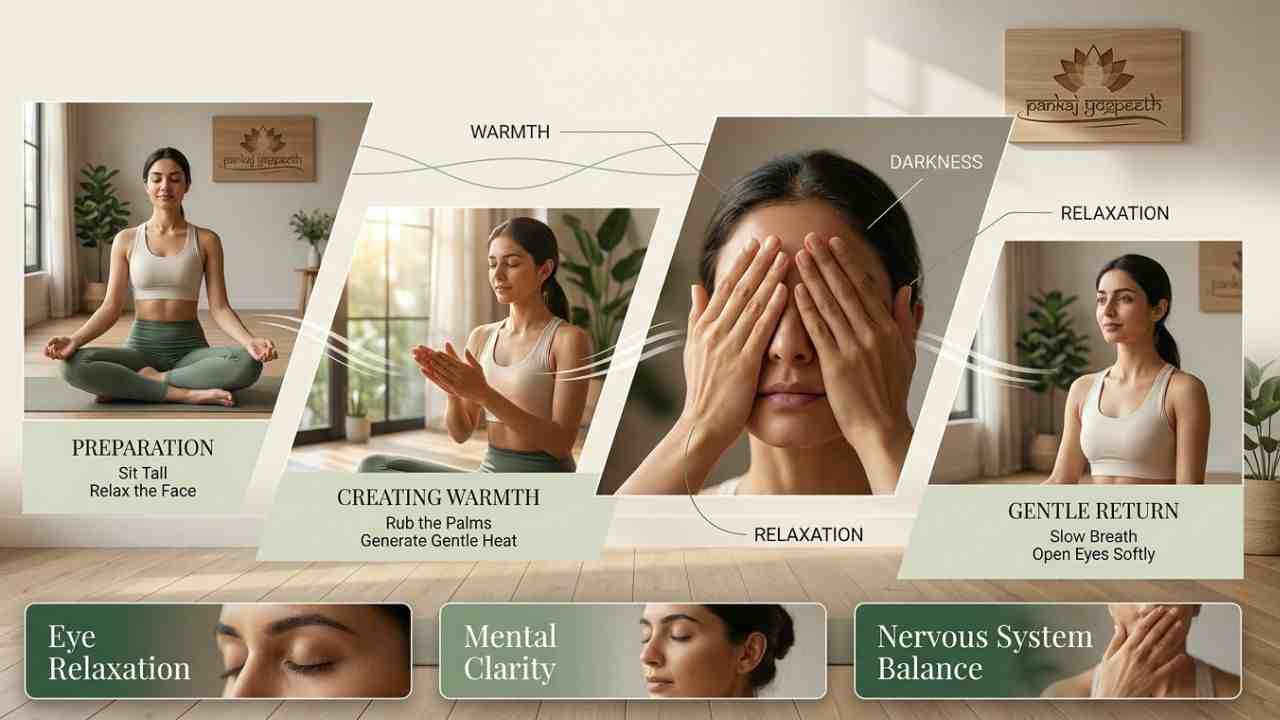
The Correct Palming Technique, Step by Step
Here are the palming steps in order, easy to follow whether you're new or managing a class:
| Step |
What to do |
Why it helps |
| 1 | Sit tall and relax your face |
Sets a calm, open posture |
| 2 | Rub your palms until warm |
Builds the soothing heat |
| 3 | Close your eyes |
Begins the inward turn |
| 4 | Cup your palms over your eyes, without pressing |
Creates warm darkness safely |
| 5 | Rest there and breathe slowly |
Eases you into calm |
| 6 | Add a three-part breath (optional) |
Deepens the relaxation |
| 7 | Stay as long as it feels good |
Lets the warmth fully absorb |
| 8 | Lower your hands, open your eyes slowly, blink |
Adjusts gently back to light |
That's the whole eye-palming exercise: No props, no strain, warmth and quiet.
How Long Should You Do Palming in Yoga?
There's no hard and fast rule, which is part of its charm. Repeat once the warmth fades. You can do this for a few minutes or a few deep breaths. It's gentle enough to practice every day, and it works brilliantly at the beginning and end of class, or any time your eyes feel tired from screens. A single heated dark minute of palming can make a big impact in relieving eye strain.
Common Palming Mistakes to Avoid
A few little mistakes ruin the calm:
- Squeezing the eyeballs. Cup always, push never. The warmth does the work, not pressure.
- Palms cool. If you don't rub it in, you lose the pleasant heat that makes palming so enjoyable.
- Leaning forward. Sit up straight, keeping your spine straight, so that your neck and shoulders are also relaxed.
- Go to the finish line. Open your eyes carefully; the softness is undone, jumping directly back to glaring brightness.
Learn them, and your palming technique will feel peaceful every time.
Who Should Be Careful with Palming?
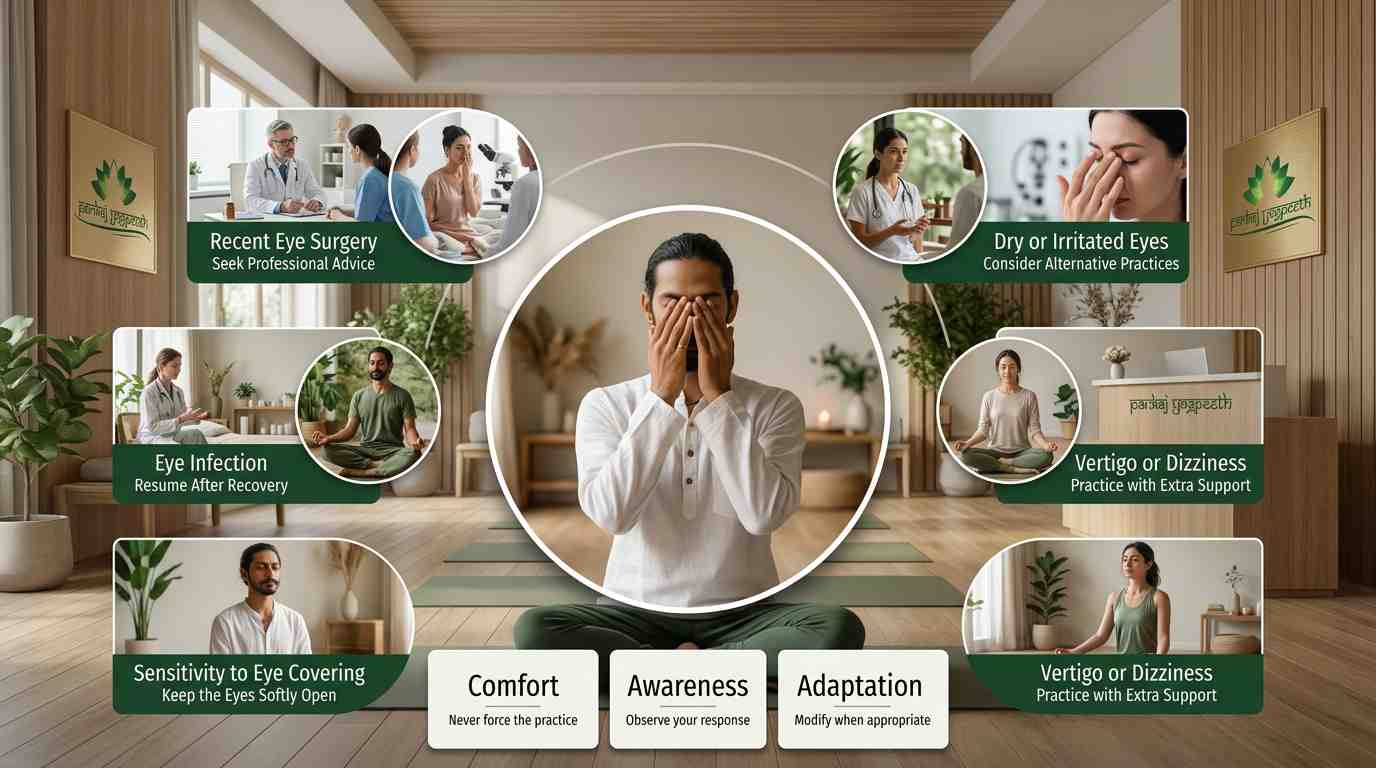
Palming is one of the safest, gentlest activities you can do on the mat for most individuals. But there are some circumstances that call for a bit of extra care. So before you make it a regular thing, here's when you pause, tweak, or ask a pro first:
- Recent eye surgery: Wait and check with your doctor before you begin.Eye infections such as conjunctivitis. Hands on the eyes can transfer bacteria, so skip it till you are fully recovered.
- Burning or dry eyes: Palming may be a bit painful here, but soft candle gazing (trataka) is typically better, as it naturally induces calming tears.
- Dizziness or vertigo: It can be disconcerting to close off your eyes, so take it carefully or lean against a wall.
- If covered eyes feel distressing: some people, like those who have been through tragedy, find it very stressful to have their eyes covered. You don't have to; there's no rule. Relax with eyes lightly open instead.
These palming contraindications are easy to observe. And if something looks out of place, always check with an eye-care specialist first.
A Small Pause That Holds the Whole Practice
So why is palming important before and after a yoga class? For it softly holds everything in between. Take a few warm dark breaths before class to clear your eyes and quiet your mind so you can truly arrive. The same simple gesture after class cools you down and locks in the serenity you’ve been working for.
Do it on purpose next time at both ends of your mat. Feel the darkness, the warmth, the gentle settling. It’s small, yet it contains the core of yoga as a whole: how you enter and leave a practice is just as important as the practice itself. That’s the quiet power of this little yoga relaxation practice.
Want to Understand the Why Behind Every Practice?
If this is the sort of information that attracts you, the science and the soul of yoga merged, then that is what further study is like. At Pankaj Yogpeeth, our Yoga Teacher Training courses go beyond the asanas and include anatomy, breath and the little but important rituals that bring a class together, like palming. Whether you wish to teach with confidence or simply enhance your own practice, there is a path here for you.
FAQ (Frequently Asked Questions):
Helpful Resources
Our Blog: Why Roll Right After Shavasana?
Course: 100-Hour YTT in Pokhara, Nepal
Our Blog: What to Eat Before & After Yoga