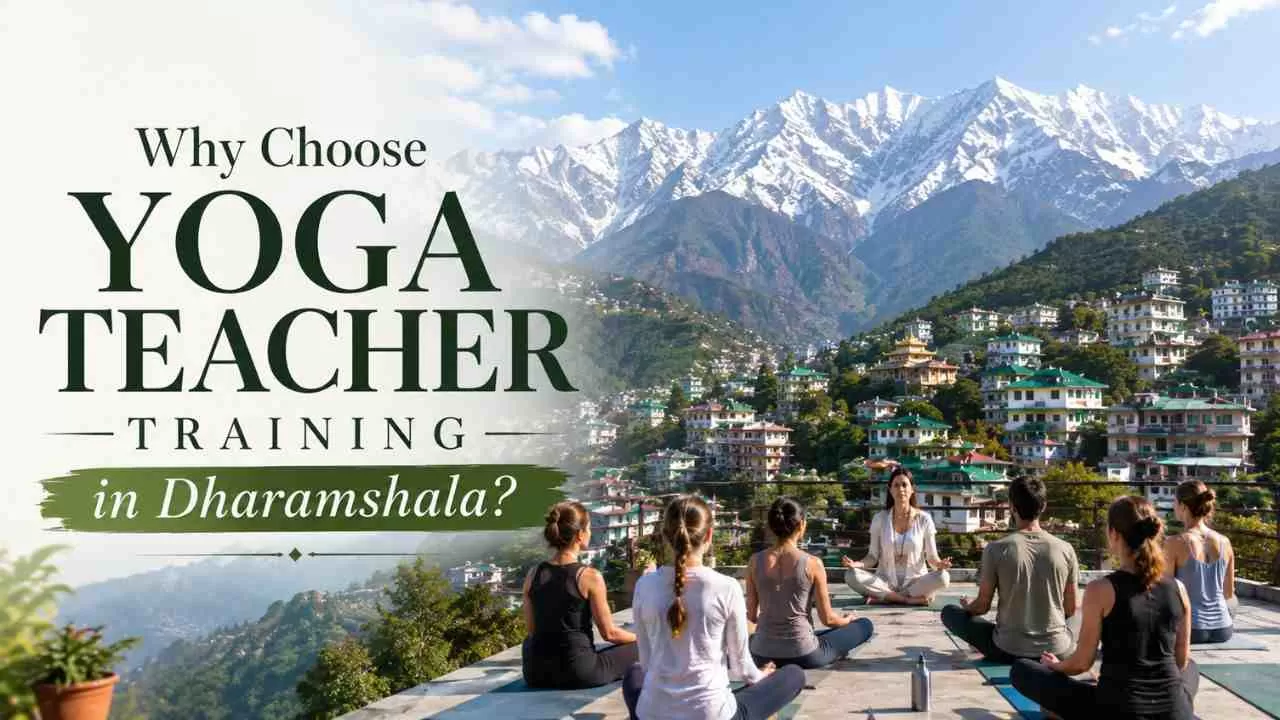

You’ve probably been at this for a while. Comparing yoga teacher training in USA programs, reading reviews and going through several institutions, you might have realised that every single one claims to be the “best”. Fees range from $2,000 to $10,000+. The curricula look practically identical on paper. The more you compare, the less apparent your option becomes.
This guide is not just another list of Yoga Alliance schools. It’s the real deal, how to filter out the noise, what to look for before you pay, what’s really worth your money, and what most US yoga schools won’t tell you up front. But before you compare a single program, there is one question worth asking first. And it’s the one most seekers skip, which is why so many of them regret it six months later.
Why the Right YTT Choice Matters More Than You Think
Ok, let's be honest. A yoga teacher training in the USA is a big investment, financially and personally. Programs range from $3,000 to $10,000+ for a 200-hour course alone. So, is yoga teacher training in the USA worth it? Sure, if you choose the proper one. This is why that option is more important than most people realise:
- Wrong school = weak fundamentals, low confidence in teaching, and thousands of dollars you can't get back.
- The right school = a skill for life, teaching credibility in the profession and a community that's got your back long after the certificate.
- Wrong fit = a certificate that stays unused in a drawer.
- Right fit = a serious career, a deeper practice, or both.
But here's the bit most readers ignore, the first actual question isn't "which school is best?" It's "Why am I doing this in the first place?"
Three Reader Types: Which One Are You?
| Reader Type |
What Rishikesh YTT Offers |
| Complete beginner |
200 hour foundational course, no prior experience required |
| Existing practitioner |
Deeper personal practice + ability to teach |
| Certified teacher |
300 hour or 500 hour advanced specialization |
Before you compare programs, figure out which route you're on. Most US seekers fall into one of three buckets: Match the school to your route, not the other way around.
Do You Even Need Yoga Alliance Certification?
Do I need Yoga Alliance certification to teach in the USA? Legally? No. Practically? Yes. Honestly? It's possible to teach without it. But most studios, gyms and insurance companies are expecting it. If you want to teach professionally, a Yoga Alliance certification is not optional. It's the standard. Once you know what you really need, the next option is how you'll learn it. Not every program is taught the same.

In-Person, Online, or Hybrid: Which Format Fits You?
Here’s something most articles get wrong: they think in-person yoga teacher training is the best option. It is not.The right approach depends on your learning style, lifestyle and budget. Online or In-Person Yoga Teacher Training: Which One is Better? It’s really a close call. There are four main formats:
The Four Main YTT Formats in USA: Compared
| Format |
Best For |
Average Duration |
| Residential / Immersion |
Career-changers, full-immersion seekers |
3-4 weeks straight |
| Weekend YTT |
Working professionals with steady jobs |
6-12 months |
| Online YTT |
Remote learners, budget-conscious students |
Self-paced or 3-6 months |
| Hybrid |
Best of both: online theory + in-person practicum |
4-9 months |
If you can take time off, a residential yoga teacher training in the USA is difficult and immersive. Weekend yoga teacher training in the USA makes learning months-long and fits around your full-time work.
The most practical and flexible way to become a yoga teacher is through an online 200-hour yoga teacher training in the USA. The hybrid programs combine the depth of in-person practical with the ease of online theory. There is no one-size-fits-all. There is only the format that suits your reality.
Is Online Yoga Teacher Training Accredited?
Yes, Yoga Alliance now permanently recognises online RYS programs, so an online 200-hour yoga teacher training in the USA is entirely valid for worldwide teaching. But the quality varies wildly. Look for live video components and real-time teacher feedback, not simply pre-recorded modules.
And that’s what makes a real training different from a celebrated video course. Format Selected? Fine. Then there’s the question that determines if you’ll actually finish the course, whatever level works for where you’re at today?
100, 200, 300, or 500 Hour: Which Level Should You Choose?
So you've agreed on your format. Now, the most important problem is, what is the difference between a 200-hour and a 300-hour yoga teacher training in the USA? And is 200 hours enough? The reality? Every level has a certain role. Choose the incorrect one, and you’ll either feel under-prepared or pay for hours you didn’t need.
100 Hour YTT in USA (Introductory Level)
A 100-hour yoga teacher training in the USA is not a complete certification; it is a taste. Great if you don't have time, or to explore whether yoga might be a career path.
Best for: Curious explorers, students still selecting their direction.
200 Hour YTT in USA (Foundational Level)
This is where most U.S. students really begin. The entry-level certification officially recognised by the Yoga Alliance is a 200-hour yoga teacher training in the USA. So, is a 200-hour yoga teacher training enough? Yes, to begin teaching in studios, gyms and online. RYT 200 training in the USA, with a minimum certificate.
Best for: New trainees, those starting their careers.

300 Hour YTT in USA (Advanced Level)
What’s the difference between a 200-hour and a 300-hour yoga teacher training? Simple, 200 makes you a teacher. 300 makes you better. 300-hour yoga teacher training in the USA for RYT-200 graduates, strengthening alignment, sequencing and philosophy.
Best for: RYT-200 grads who want to deepen their teaching.
500 Hour YTT in USA (Master Level)
For students who plan to pursue a long-term career in yoga, a 500-hour yoga teacher training in the USA brings together two levels into a single qualification, which is the highest internationally recognised RYT certification. Best for: Teachers, future studio owners. So with the level selected, the question every US reader calculates in quiet first is, what's the actual price tag attached?
What's a Fair Price for YTT in USA?
You've undoubtedly seen this already. USA Yoga teacher training is not affordable. Programs range from $2,500 to $10,000+, and the fees alone can feel like a down payment on a car. But not all price tags are right. Some schools request premium rates because they are worth it. "Others charge high rates because they know students will pay them.
So, how much does yoga teacher training cost in the USA, and what's actually a fair price? Here's the straight-up level breakdown:
| Course Level |
Fair Price Range (USA) |
| 200 Hour YTT |
$2,500 to $5,500 |
| 300 Hour YTT |
$3,500 to $6,500 |
| 500 Hour YTT |
$6,000 to $10,000+ |
Anything well outside these ranges requires a real reason: good location, top faculty, total residential immersion. Anything significantly below that? Carefully check before you pay.” Cheap isn’t the same as affordable.
What's Included in YTT Fees (and What's Not)
What you might see inside that fee before you agree to a number and what gets quietly attached later:
| Cost Component |
Typically Included |
| Tuition |
Always |
| Course materials / manuals |
Usually |
| Accommodation |
Only in residential immersions |
| Meals |
Only in residential immersions |
| Yoga Alliance registration fee |
Almost never (you pay separately) |
| Yoga mat / props |
Usually not |
The Yoga Alliance registration fee may surprise most students, so allow for an extra $80-$115 per year on top of your course cost.
How to Save Money on YTT in USA
Are you looking for affordable yoga teacher training in USA? You have 3 genuine options:
- Sliding scale tuition: Some schools charge different rates based on income.
- Payment arrangements: Most reputable RYS schools offer 3 to 12 month payment plans.
- Work-study programs: Trade administrative or hosting work for reduced tuition costs.
And if funding is really the main problem, have a look at international YTT options (Rishikesh, Bali, Mysore) with the same Yoga Alliance credential, often for a fraction of the price. Now you know what fair is. But reasonable prices are meaningless if the school itself cannot be trusted. So, how do you actually verify a yoga school in the USA?
How to Verify a YTT School In USA: Your 8-Point Checklist
Here’s what most US seekers get wrong. More than 6,000 registered schools in the US are part of Yoga Alliance, and not all of them earn their RYS badge. What is the best yoga school in the USA? The truthful answer is that it depends on how well you check before you settle.Here are the criteria that separate true Yoga Alliance-certified schools in the USA from those that only seem legitimate.
The 8-Point Pre-Booking Checklist

- Yoga Alliance USA RYS registration: Check the Yoga Alliance registry directly, not the school’s website. Many schools let their registration expire without any trouble.
- Lead Trainer Credentials: E-RYT 500+, which indicates they have taught at least 2000 hours after their own 500-hour certification.
- Years school has been running: 10+ years means stability. Newer schools can still be great, but check them out carefully.
- Independent reviews on Yelp, Google & Yoga Alliance directory: Websites collect testimonials. Find at least 20 real ones across platforms.
- Transparency of curriculum: The syllabus of a real school is open. If you have to email for it, that’s a red sign.
- Ideal class size (15-25): Anything over 30 is assembly-line teaching. You will be a face in a throng, not a pupil getting actual changes.
- Mentorship + hours in practicum: Ask how many hours of supervised instruction are provided. This is what sets learning yoga apart from learning to teach yoga.
- Refund and travel policy: No written refund policy equals a red flag. Life happens, and good schools get it.
A school that completes all eight is most often one of the best yoga schools in the USA. Not just one of the loudest. Which gets us nicely onto the next big questio: is staying in the USA even the best move for your budget and growth?
Should You Consider International YTT Instead?
Here’s the comparison most US articles don’t mention. So, should I do yoga teacher training in the USA or India? Honestly, neither is better. They are different for various students. The correct answer depends largely on your time, budget, and what you are genuinely looking for. So here is the upfront comparison:
| Factor |
YTT in USA | YTT in India |
| Cost |
$2,500 to $10,000+ | $650 to $2,800 (accommodation included) |
| Format |
Mostly part-time / weekend | Residential immersion (21-60 days) |
| Lineage depth |
Mixed; varies by school | Direct traditional lineages |
| Yoga Alliance validity |
Same, both register globally | Same, both register globally |
| Best For |
Working professionals with commitments | Career-changers, full-immersion seekers |
See the Yoga Alliance line; both will offer you the same RYT certification. The difference is not the certification. It's the price, the depth, the experience.
When USA Makes More Sense
If you have a full-time job, family commitments or simply can’t take a month off, local yoga teacher training in the USA is the better call. You can train on weekends or part-time without affecting your life.
When International Makes More Sense
If you’re between employment, considering a career move, or want maximum depth per dollar, Schools like Pankaj Yogpeeth offer full-immersion programs in yoga teacher training in destinations like Rishikesh, Mysore, or Pokhara, which offer full immersion for a fraction of the US cost. With all the factors considered, just the most personal inquiries remain, the minor worries every reader still has before booking.
Conclusion: Finding the Right YTT for You
This guide began with you feeling overwhelmed by choice. By now, you have seen what to look for, what to compare, what is fair to spend, and what schools won’t tell you up front. The best yoga teacher training in the USA is not the most popular Instagram name or the cheapest weekend program. It’s the one that matches your level, your lifestyle, your budget and your genuine motive for training. Back to index. Choose two or three programs, in this country or elsewhere.
Then see whether the school answers with real caring versus slick marketing. If you can look beyond the US, Pankaj Yogpeeth (courses in Rishikesh, Varkala and Pokhara) is one to keep on that short list. Authentic teaching, inexpensive, transparent pricing, and real depth. The logo on your certificate doesn’t define who you are as a yoga teacher. It’s a matter of how deep you go.
Read next
Helpful resources
Good to know
Questions, answered
01What's the Minimum Age for Yoga Teacher Training?
Most YTT programs in the US require students to be above 18. There are some advanced programs like 21+. There is no upper age limit, students in their 60s, 70s and beyond graduate from teacher training every year and go on to teach successfully.
02What's the Difference Between RYS and RYT?
RYS (Registered Yoga School), the school is registered with Yoga Alliance. You are the graduate, RYT (Registered Yoga Teacher). To become a RYT, you must complete your training at a RYS-registered school. Both must be in effect to keep credential valid.
03How Do I Get Students After Completing YTT?
Start locally, friends, family, your home studio, community classes. Build a small following on Instagram or YouTube. Word of mouth can be generated by starting with free or low cost classes. The first 50 students are the worst ones. Thereafter, acquiring students after YTT is a snow ball.
04Can I Teach Yoga Online From Home After Certification?
Sure. Teaching yoga online from home is one of the fastest growing avenues for new teachers to create a student base. And with platforms like Zoom, YouTube, Instagram Live, and specific yoga marketplaces, it’s easier than ever.
05Is Yoga Alliance Certification Recognized Worldwide?
Yes, Yoga Alliance USA certification is accepted in 100+ countries around the world. It’s the most acknowledged yoga certificate in the world. An RYT credential travels with you wherever you teach, whether it’s in the US, India or Bali.
06Do I Need Insurance to Teach Yoga in USA?
Yes. Almost every US studio, gym, and corporate wellness program has teachers carry liability insurance. Annual plans generally run $150 to $300 from providers such as beYogi or NACAMS. You’ll find it hard to land teaching gigs without it.
07Can Beginners Do Yoga Teacher Training in USA?
Yes, most 200-hour YTT programs are open to total beginners. Fancy stances and years of expertise aren’t necessary. What matters most is a strong dedication to learning, and a willingness to explore into philosophy, anatomy and teaching style.
08How Much Do Yoga Teachers Make in the USA?
The typical US yoga instructor salary is $35,000-$65,000. Experienced teachers and business owners can make $80,000+. Hourly charges start at $40-120 each lesson. Your earnings can vary greatly depending on where you are, what you’re teaching, and whether you’re teaching independently or at a studio.
09Is 200 Hour YTT Enough to Teach Professionally in USA?
Yes! 200 hour yoga teacher training is the minimum certificate required by most US studios, gyms and online platforms. You can definitely start teaching with it. But many teachers eventually seek out 300 or 500 hour training to develop their expertise and charge greater rates.
10How Long Does Yoga Teacher Training Take in USA?
Depends on the format. You can do a 200 hour YTT in 3-4 weeks as an immersion program or part-time over 6-12 months. 300 hour course 4-6 weeks immersion or 8-12 months half time. The complete 500 hour training takes 2-4 months full immersion or 12-18 months part time.