
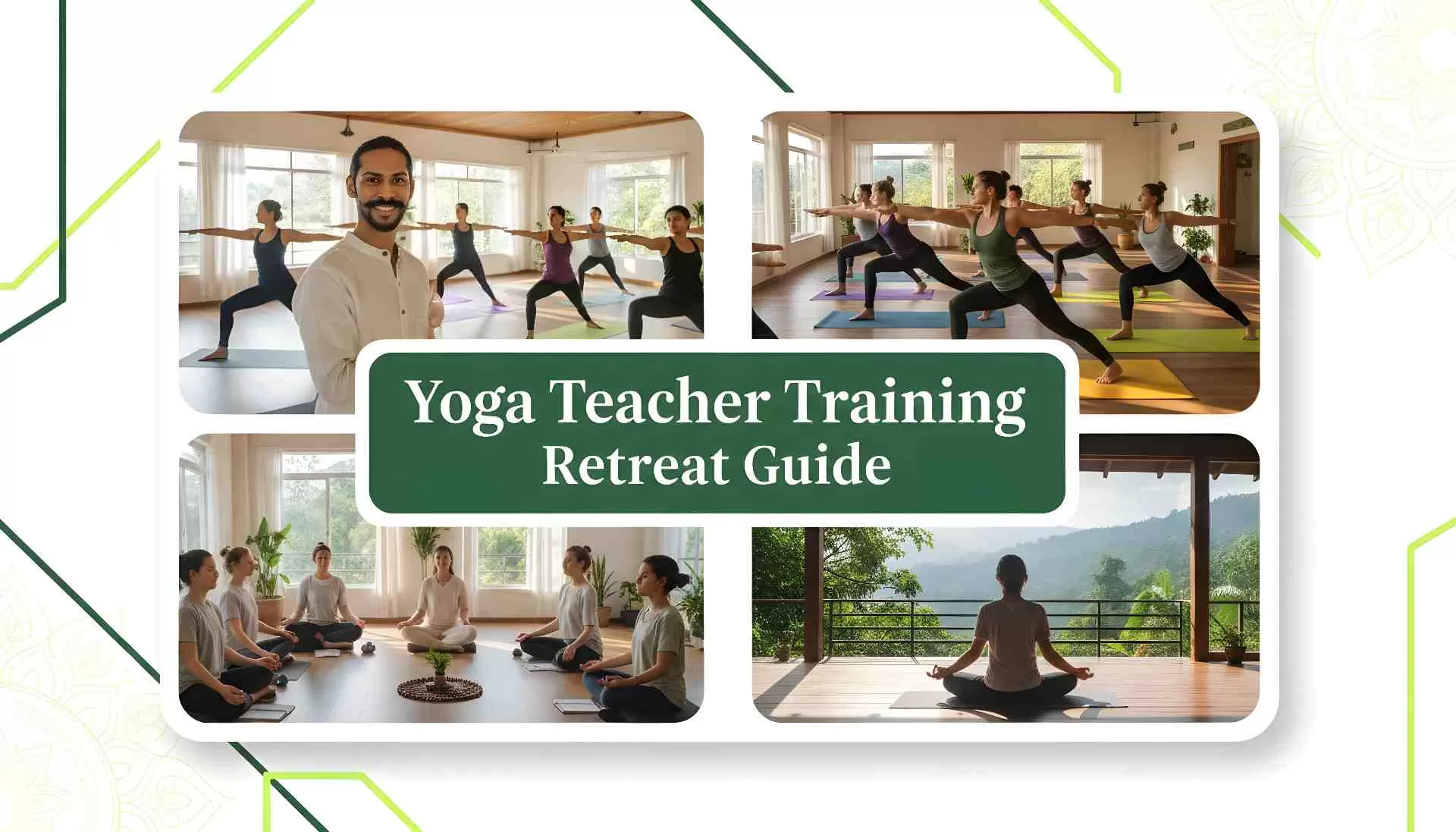
Why a Yoga Teacher Training Retreat Changes Everything
Are you working full-time but find yourself dreaming about a deeper purpose? You could have been doing yoga for years and are now ready to take the next step: going to a yoga teacher training retreat. But deep inside, you're still asking yourself, "Is this really for me?"
You are not the only one. Many people start looking into yoga teacher training abroad or a 200-hour yoga teacher training retreat while also dealing with work, family, and self-doubt. A yoga teacher training course isn't just about getting a certificate to teach yoga. It's also about finding your balance, confidence, and connection with yourself again.
This experience changes how you see yoga and life, whether it's a long, in-depth yoga teacher training or a short, intensive program. Before you book your flight and pack your mat, here are 13 things to consider about before you start your YTT experience. These tips will help you make a clear, confident, and heartfelt choice.
1. Understand What Yoga Teacher Training (YTT) Really Means
Before you sign up for any yoga teacher training YTT program, this is the first thing you need to know. If you're already looking into it, congratulations! You've already taken your first step toward change.
It's not simply about doing hard poses or getting a certification in a yoga instructor training course. It's about finding out about yourself by studying how your body moves, how your mind works, and how your breath connects the two. You will grow as a person and a yoga practitioner via philosophy, anatomy, and attentive teaching.
What You’ll Discover in a Yoga Teacher Training Course
| Focus Area |
What You’ll Learn |
Why It Matters |
| Asanas & Alignment |
Proper posture, balance, and form |
Helps you teach safely and confidently |
| Pranayama & Meditation |
Breathing techniques and stillness |
Calms your mind and reduces stress |
| Philosophy & Lifestyle |
Learn yogic wisdom and daily discipline |
Connects yoga beyond the mat |
| Anatomy & Body Awareness |
How the body moves and heals |
Prevents injuries and improves teaching |
| Teaching Methodology |
How to guide others effectively |
Builds your voice and confidence as a teacher |
Understanding RYT Certification
Yoga Alliance recognises the RYT 200 and RYT 500 certifications as "Registered Yoga Teacher" credentials.
- RYT 200: 200-hour yoga teacher training retreat that is great for beginners.
- RYT 500: An advanced curriculum that helps you learn more about and improve your practice.
If you sign up for a yoga training program in your area or go abroad for an intense yoga training, keep in mind that your YTT journey is not about becoming someone else. It's about returning to yourself.
2. Choose the Right Destination for Your YTT Journey
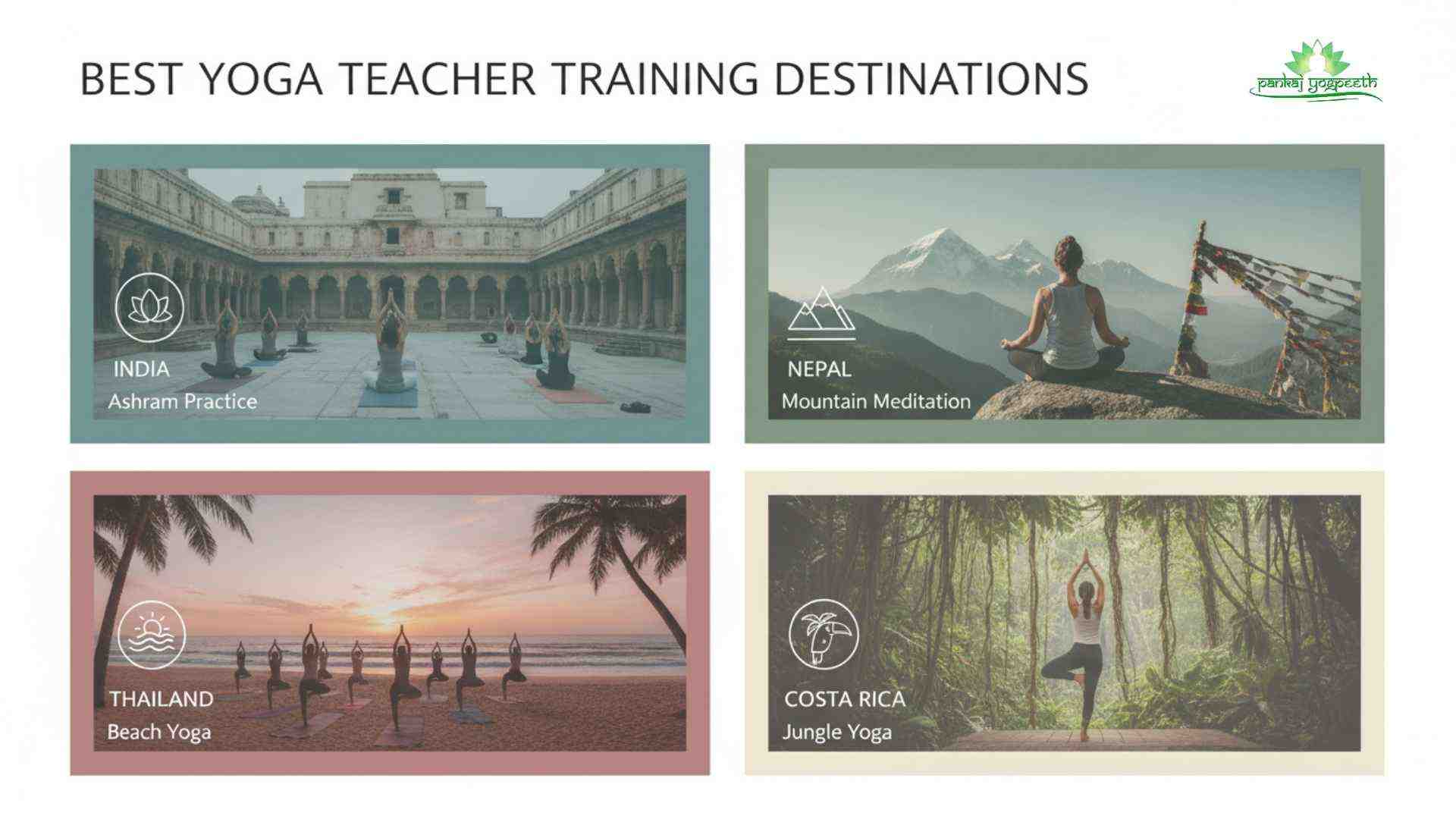
What makes a difference is where you choose to learn how to teach yoga. Things like the sounds, the people, and the culture around you all help you grow.
If you've been wanting to study to be a yoga teacher abroad, take a moment to think about what kind of energy you need right now. Want old knowledge and customs? To India you go. If you are looking for peace and mountain views? Nepal will be your perfect choice. Need some tropical peace? Get away to Thailand or Costa Rica. Each place has its own way of helping you get to know yourself better.
And if you're from India, you don't need to go far — there are beautiful YTT programs in India like Pankaj Yogpeeth, where you can learn authentically in a peaceful setting. If you can afford it, international yoga teacher trainings also give you the chance to see the world while you learn how to be a better teacher.
Popular Yoga Teacher Training Destinations
| Popular Yoga Destinations |
Why Yogis Love Them |
| India |
Rooted in ancient yoga philosophy |
| Nepal |
Calm, spiritual, and surrounded by the Himalayas |
| Thailand |
Gentle island energy with modern comfort |
| Costa Rica |
Nature, mindfulness, and balance |
| USA |
Well-structured yoga teacher training US options |
No matter where you go for your yoga teacher training—abroad or in your own country—remember that what matters most is how deeply you connect with your practice.
3. Decide Between Intensive or Immersive Training Styles
We all have unique yoga journeys, and that's great! An intense yoga teacher training or an immersive yoga teacher training are the two main types of yoga teacher training.
Intensive Yoga Teacher Training (2–3 weeks)
If you're a working professional or someone who can't take months off, an intensive yoga teacher training might be your perfect fit.
- There are many things going on, and it's very intense.
- You will practice, meditate, and learn theory all day long.
- Yoga teacher training or yoga intensive training that lasts for two weeks gives you a strong base quickly. It's kind of like putting your life on "hold" and focusing on your yoga.
Immersive or Residential Yoga Teacher Training (4–8 weeks)
Another option is an intensive or residential yoga teacher training if you want to practice yoga instead of just learning it. The programs last between 4 and 8 weeks, or even longer, and give you the chance to slowly grow, think deeply, and meet with other like-minded people every day.
You can't give a single answer because it depends on your body, mind, and way of life.
- Go for a residential yoga teacher training or the best in-person yoga teacher training if you like order and being with other people.
- Try an intense yoga program if you want to push yourself and change quickly.
It doesn't matter how long yoga training lasts; what matters is how much it changes you.
4. Choose Your Preferred Yoga Style
Before you enroll for a yoga teacher training course, think about what kind of yoga really speaks to you. It's important to pick the right style for your trip because each one has its own rhythm and purpose.
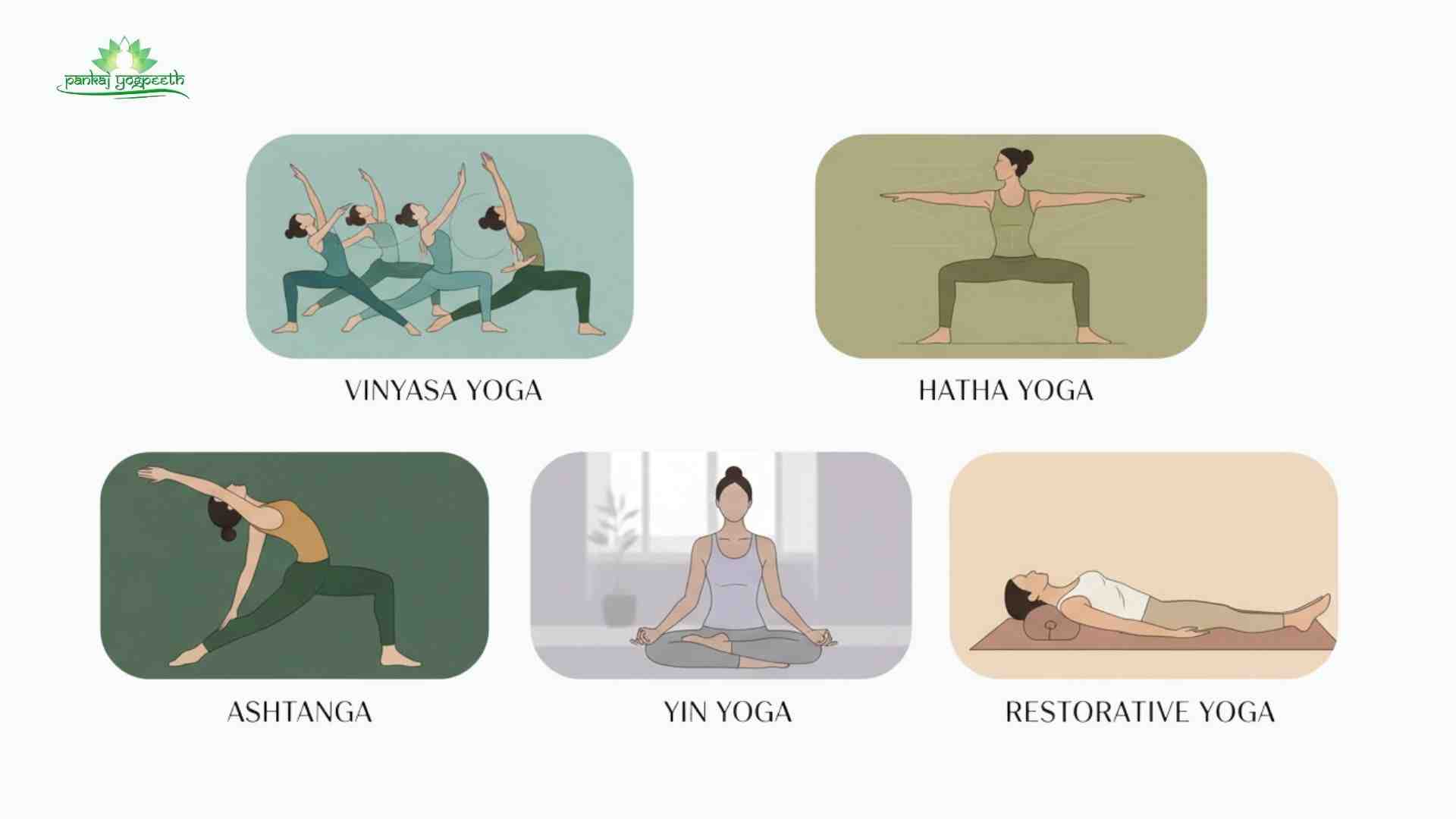
You'll learn about these famous styles during your vinyasa yoga instructor training or yoga vinyasa teacher training:
Vinyasa yoga is artistic, based on flow, and great for getting stronger and more durable.
- Hatha yoga focuses on basic poses, breathing, and getting the body in the right position.
- Yin yoga is slow, quiet, and deeply relaxing. It is great for keeping your emotions in check.
- If you like being disciplined, Ashtanga Yoga is a strong, structured exercise for you.
- Restorative yoga is light and healing, making it perfect for getting rid of stress and getting better.
Many of the best yoga courses in the world now offer training in more than one style. This way, you can try out different styles before deciding which one you want to focus on. This method makes you a more adaptable and well-rounded teacher who can help students at all levels.
5. Check Yoga Alliance Accreditation Before You Join
Make sure your training is at a school certified by Yoga Alliance. This is something that many newbies forget. It's more important than you think.
Why? Because Yoga Alliance training ensures that your license is accepted worldwide. If you want to teach yoga in India, Bali, or the U.S., going on a Yoga Alliance-approved retreat will give you respect and trust as a teacher. Before signing up, always:
- Look up the name of your school on the Yoga Alliance page.
- Check to see if the program is named RYT 200 or RYT 300.
- Find out if your award will be recognised around the world once you finish it.
Choosing an approved yoga teacher certification retreat will give your hard work real value and make sure that your path to becoming a certified yoga teacher is real and taken seriously.
6. Learn About Your Teachers and Their Backgrounds
The teachers you have will form not only what you learn but also how you grow as a yoga teacher. Take the time to find out who is leading you before you join any program.
Think about this: Would I trust this person to lead me on one of the most important trips of my life?
If you're looking into yoga teacher training programs in your own country or abroad, make sure the teachers are RYT-certified and have years of experience teaching. Reading reviews of yoga teachers and instructors can tell you a lot about their attitude, how patient they are, and how much they love teaching. Some, like those who have gone through Kripalu teacher training, bring a lot of different kinds of knowledge from different times and places.
Remember that your teacher is more than just someone who shows you how to do poses. They are also someone who can teach you about theory, self-discipline, and kindness.
Questions to Ask Before Enrolling
Before you sign up for any yoga teacher training school, here are some important things to think about:
1. What is the name of the lead teacher, and how long have they been teaching?
2. What kind of yoga do they teach? Is it classic, based on Vinyasa, or more holistic?
3. After you finish the course, do they offer coaching or other help?
4. Are they part of the best yoga teacher training programs or recognized by Yoga Alliance?
One of the most important things you can do to become a yoga teacher is to find the right guide. A good yoga teacher doesn't just teach you how to teach; they also help you find your own style as a yoga teacher.
7. Know the Type of Environment You’ll Be Learning In
Imagine you wake up to the sound of birds instead of alarms, drinking tea before the sun rises, and putting down your mat under palm trees or mountain mist. Is it amazing? This is what's great about yoga training camps. Consider the vibe that makes you feel good before you sign up:
- For people who love the ocean, fresh air, and the endless horizon, beach retreats are great.
- Mountain areas are quiet, provide a chance to reflect, and are excellent for significant spiritual growth.
- Eco-lodges are easy, natural, and brilliant for getting back to nature.
You should know that if you go to a residential yoga teacher training school, you will be constantly learning about and doing yoga. Pick a place to learn how to be a yoga teacher that feels like a second home and that feeds more than just your skills.
8. Understand the Schedule and Commitment
To be honest, a yoga teacher training course isn't just sunsets and savasana. It's exciting, but you have to do it all the time. "Oh, it's just a retreat," you might be thinking. But trust me, it's more than that. How might your days be on a yoga training retreat?
This is what your daily life might be like on a yoga retreat:
Sample Daily Routine During YTT
| Time |
Activity |
What It Does |
| Morning |
Pranayama & Asana |
Centers your energy and focus |
| Afternoon |
Anatomy & Philosophy |
Builds knowledge and awareness |
| Evening |
Meditation & Journaling |
Helps process emotions and growth |
Mentally and emotionally, get ready for something like Yoga teacher training or a yoga teacher intensive training. Although it requires dedication, the work will be greatly rewarded.
9. Plan Your Budget Wisely Before Joining
Now, let's talk about money, because you need to be smart about how you spend your dream yoga teacher training abroad. You don't have to go to the most expensive getaway to have the best time.
I tell all of my friends that if money is tight, India or Nepal are great places to get a cheap yoga teacher certification. The teachers are very authentic and live and breathe the practice.
Some of the best places to go on a yoga teacher training vacation with healthy buffets and eco-lodges are in Costa Rica and Thailand.
Tips to Save Money on Your Yoga Certification
1. If you book early, you can save money.
2. Cut costs by sharing a room with another yogi.
3. Look for work exchange programs that offer food or a place to stay.
Becoming a qualified teacher isn't about how much money you spend, but about how willing you are to learn.
10. Pack Smart — What You’ll Really Need
Let's be honest: it's easy to bring too much on your yoga teacher training vacation. Do not worry, you will not require ten pairs of tights or expensive items that you will never use. You want to grow, not look good.
Some things you might not think of when you're travelling for yoga teacher training are on this real list:
Essentials for Yoga

- The kind of yoga mat that you love using for practice
- Yoga clothes that are comfortable, light, and breathable (3–4 sets are enough)
- A small or mat towel for when you get sweaty
- Environmentally friendly water bottle—stay hydrated!
- Bring a small bag or tote to school.
- Need-To-Haves for Comfort and Travel
- A light scarf or blanket for travel is great for meditation
- Reusable cups and spoons are liked by many eco-retreats.
- Beach sandals and one pair of comfortable shoes
- Nature-based products, like soaps, deodorants, and other items.
- Keep a journal and pens with you during YTT. Your thoughts will surprise you.
- Snacks (almonds, dates, and herbal tea bags are great for in between lessons)
If you're going to Camp YTT or a yoga vacation teachers' program, don't bring too much. Nothing should make your experience heavy; everything should make it lighter.
11. Prepare Mentally and Emotionally for Your YTT
It's not talked about enough that to become a yoga teacher, you need to be emotionally strong as well as physically strong.
You will think about things, feel tired, and grow while you are in your yoga teacher training abroad or instructor school. It's okay; it means you're growing. Every day, take a few minutes to breathe, reflect, or write down your "why."
Emotional and Mental Readiness Tips
- Consistency is more important than perfection; 20 minutes a day is better than two hours once a week.
- Take your time with your feelings; change can be painful.
- Write down your "why" to help you remember why you picked this path.
- Be honest and nice to your teachers, your friends, and most of all, yourself.
Remember that every yoga teacher you look up to was once just like you: scared, excited, unsure, but ready to start.
12. Life After Certification — What Comes Next?
Congratulations, you've finished your yoga teacher certification retreat! Now, what do you do? This is where the real journey starts. Not only do you have to teach to become a yoga teacher, you also have to share what you've learned and live your truth.
After getting your certificate, you can become a RYT (Registered Yoga Teacher), build your own brand, or even teach yoga in other countries. Want to know how to become a yoga teacher that stands out? Being real. Don't change what you do; that's what your new kids will connect with.
Career Opportunities After YTT
After you finish your yoga teacher training, you can:
| Path |
What It Involves |
Why It’s Rewarding |
| Teaching at Studios |
Lead classes in yoga centers, gyms, or wellness resorts |
Build real teaching experience |
| Hosting Retreats |
Organize or assist in international yoga retreats |
Travel and share your energy |
| Online Classes |
Teach virtually or record video sessions |
Reach a global audience |
| Social Media Presence |
Build a yoga community on Instagram or YouTube |
Inspire and connect authentically |
13. Embrace the Journey — It’s More Than a Certificate
The truth is that your yoga teacher training vacation is more than just getting a certificate. It has to do with change. It's about finding yourself again through discipline, kindness, and awareness.
| Focus Area |
Why It Matters |
How It Transforms You |
| Mindfulness |
Keeps you grounded in daily life |
Reduces stress & improves awareness |
| Self-Practice |
Deepens understanding beyond theory |
Builds confidence & authenticity |
| Lifelong Learning |
Yoga is a journey, not a goal |
Encourages growth & curiosity |
Final Thoughts — Begin Your Yoga Journey with Confidence
Yoga teacher training isn't just a course; it's a way to change the way you live. Every moment on the mat brings you closer to your true self, whether you want to teach or just get better at what you do.
This is the sign you've been waiting for. Take the first step toward change, balance, and meaning by going on Pankaj Yogpeeth's 200-hour YTT retreat.
Because the best schools for becoming a yoga teacher change more than just teachers' lives.