
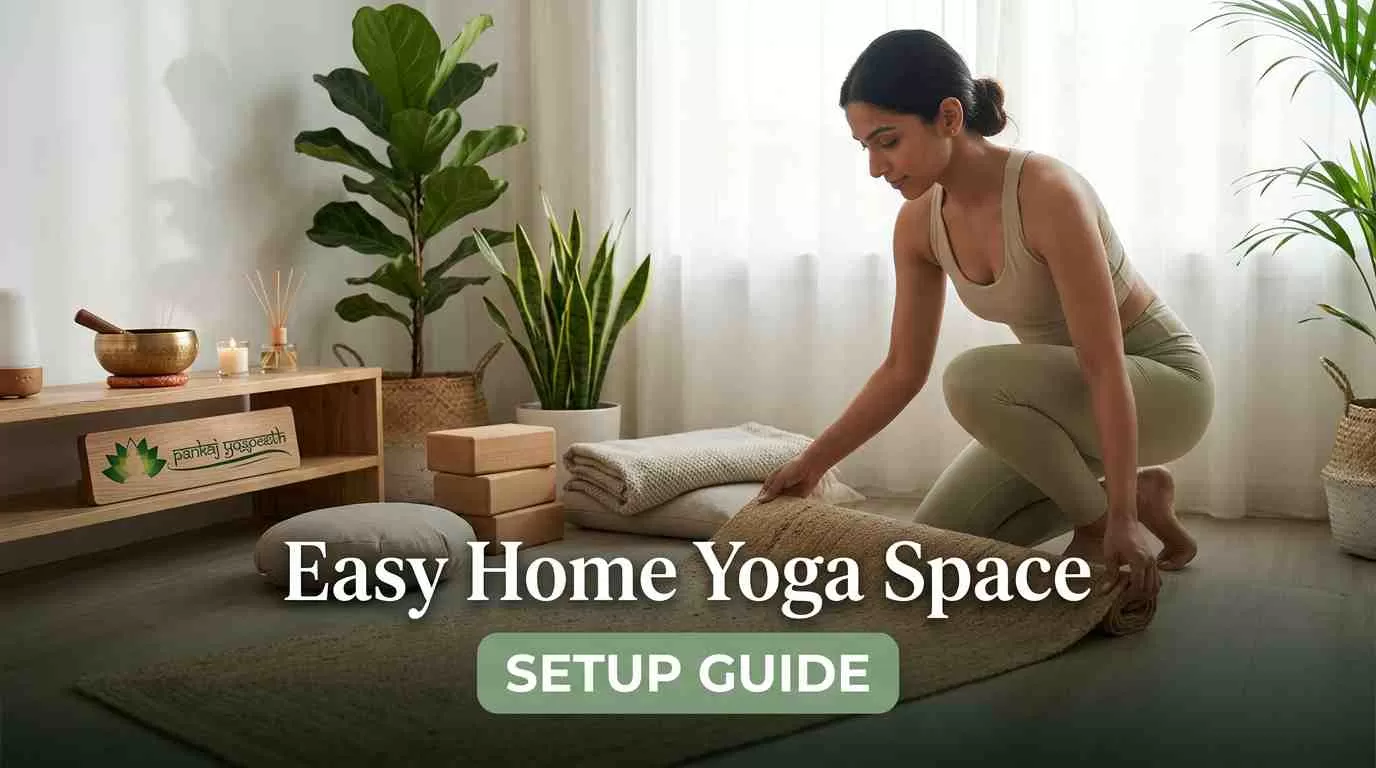
You'd like to do yoga at home, but you don't know how to begin. Good news: you don't need much money or a special room to set up a yoga space at home. Your bedroom can be a yoga corner, your living room can be a meditation space, or your whole house can be a yoga studio. All you need is a quiet place, some basic yoga equipment, and the willingness to show up.
This guide will show you how to make a yoga set that fits any area, from small apartments to big homes, on a budget. You'll learn how to pick the right yoga mat, set the right mood, and arrange your practice space so that you can be as calm and focused as possible. Yoga at home can begin right now, where you are. You, your mat, and the desire to start-no delays or excuses. Let us help you make your own yoga space.
Why a Dedicated Home Yoga Space Matters
Think about this: something changes inside you when you walk into a yoga class. You breathe less quickly. Your thoughts stop. You're ready to work out before you even get on the mat.
Making a space at home just for yoga has the same power.
If you set aside a certain area of a room or corner for yoga, your mind will learn to connect that place with practice. When you go back there, your body and breath start to settle down on their own. The change happens more quickly. The fight gets weaker.
Home Yoga Space Benefits You'll Notice Immediately
- It gets easier to be consistent. You don't have to get ready, drive anywhere, or wait for class to start. Your practice place is always ready for you, whether it's early in the morning, late at night, or whenever you have time.
- The distractions go away. A designated spot lets you and your family know it's time for you. There will be no phones or other distractions, just you and your exercise.
- Your daily home yoga practice gets stronger on its own. When everything around you supports your purpose, it's easy to show up. What used to feel like work turns into a habit.
- There's not much room for you. It's okay to use a small corner. It must be yours-a place where you can stop and let your inner world shine.
Benefits of Having a Home Yoga Studio
Having a yoga room at home changes how you do yoga and how you live. When yoga becomes a regular part of your life, the benefits go beyond what you do on the mat.
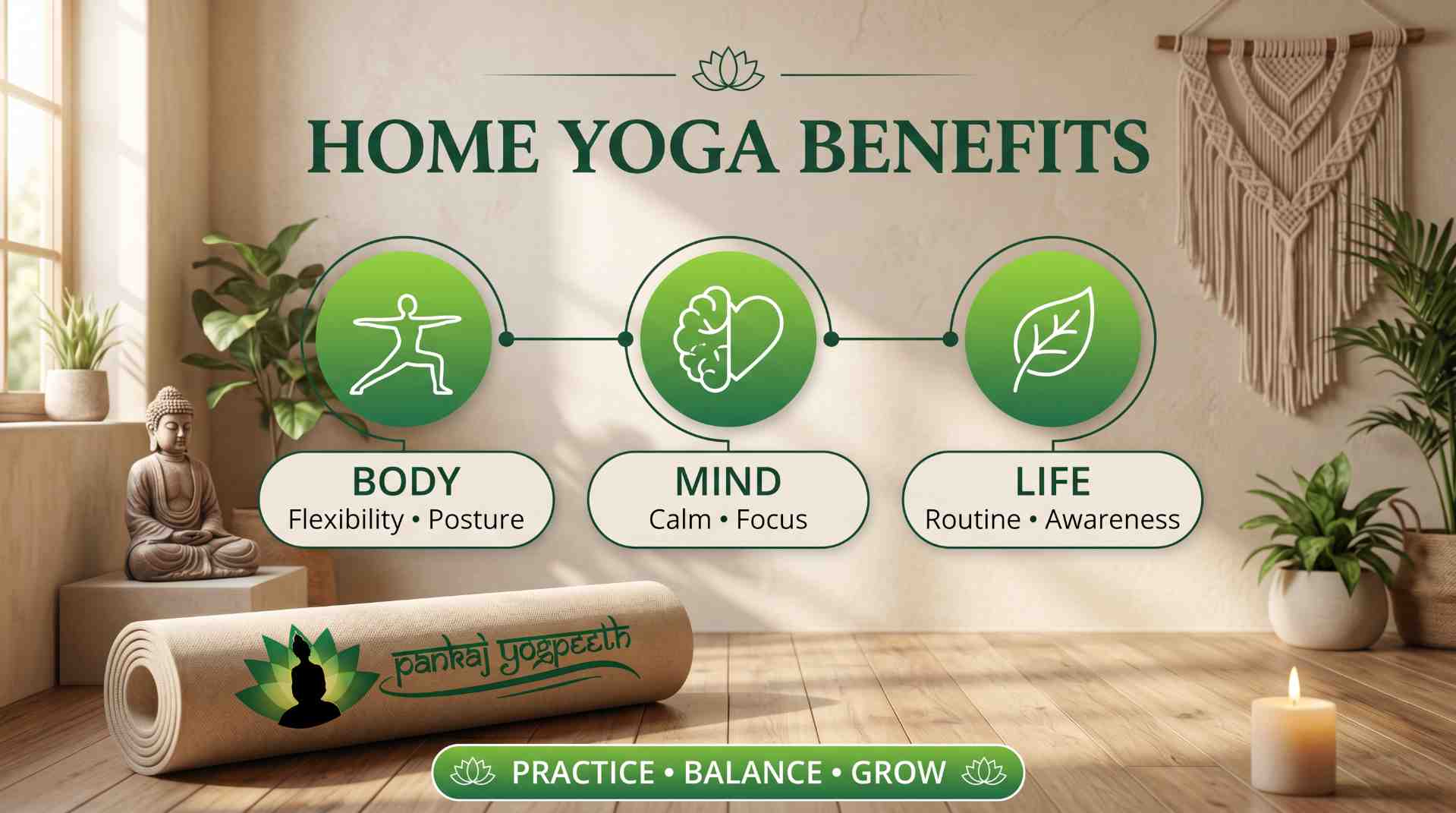
Physical Benefits
When you practice regularly at home, your body changes. You'll feel less stiff, more flexible, and have better posture and balance. This is especially true if you spend a lot of time sitting at a desk. The benefits of doing yoga at home can be seen in how you go about your day.
Mental & Emotional Benefits
Your home yoga room becomes a safe place for your mind. As your nervous system learns to keep itself in check, worry gives way to calmness. When you have a place to let go of stress whenever you need to, it melts away. Your focus gets better, and your mental stability grows on its own.
Lifestyle & Spiritual Benefits
Home practice changes more than just your physical and mental health. It changes the way you live your whole life. You save time and money by not having to commute to and from the workshop. Daily restraint grows on its own. With each lesson, you become more aware of your breath, and mindfulness starts to seep into your daily life.
Home Yoga Studio Benefits Overview
| Benefit Area |
Impact |
| Physical health |
Strength & flexibility |
| Mental wellness |
Calm & clarity |
| Lifestyle |
Time & cost saving |
| Spiritual growth |
Self-connection |
At Pankaj Yogpeeth, students are urged to practice at home because daily self-discipline leads to change. The school shows you how to use the method, but the real change happens when you do it at home.
Step-by-Step Guide to Set Up a Home Yoga Space
It doesn't have to be hard to set up your home yoga studio. If you follow these easy steps, you'll have a yoga place at home that works in hours, not weeks.
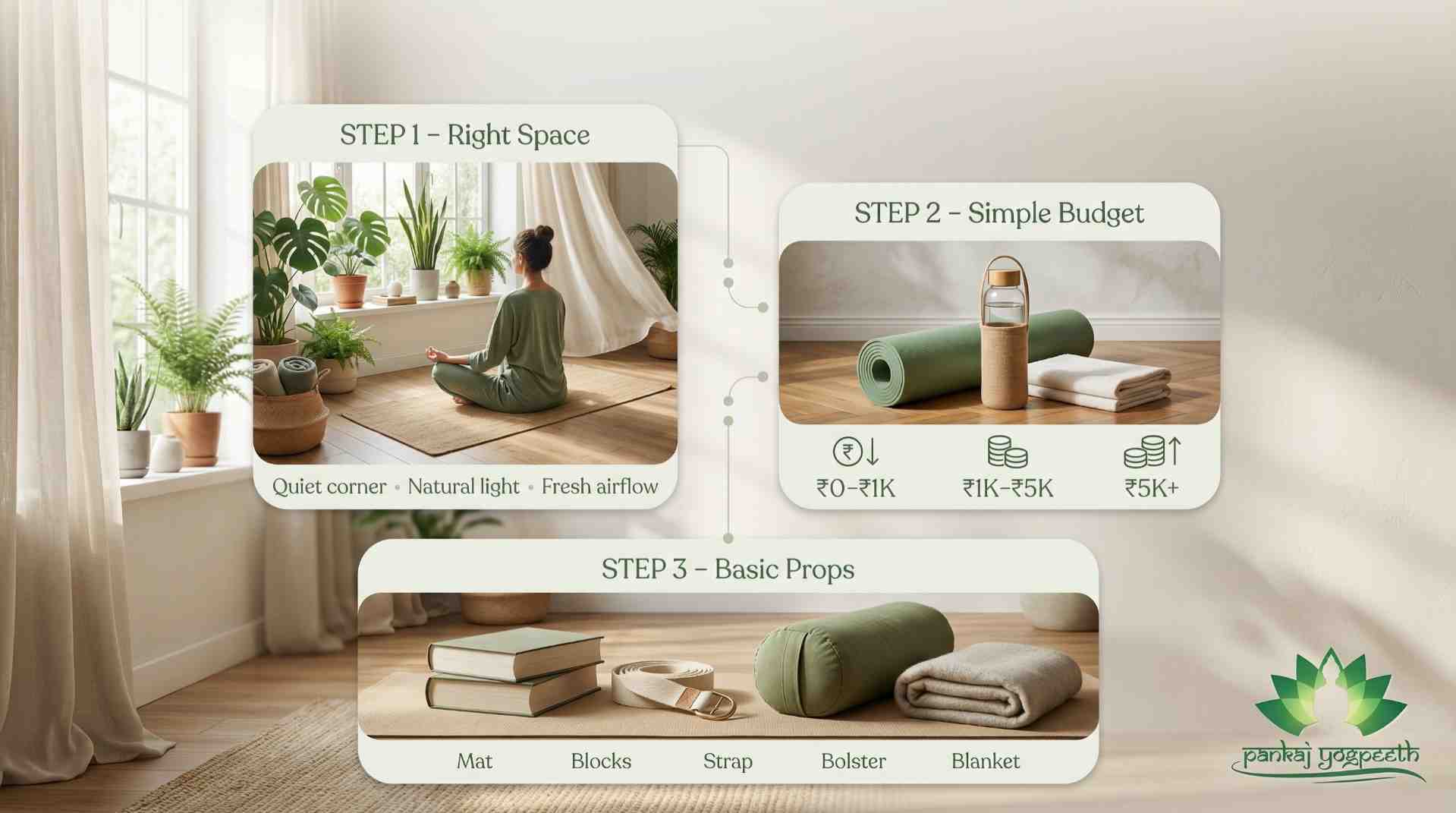
Step 1 - Choose the Right Location
Choose a quiet spot with good airflow, and that won't bother anyone. A corner in the bedroom works great. A peaceful corner in your living room or a porch that lets in lots of natural light also helps. Don't put your practice space next to the TV or in a busy area where family members will be walking by all the time.
Light and air from outside make a difference. Pick a spot close to a window if you can. When you can breathe right, your body and mind work better.
Step 2 - Decide Your Budget
Yoga is easy to do, and your budget shouldn't stop you from doing it. Here's a breakdown that makes sense:
| Budget Type |
Approximate Cost |
| Low budget |
₹0 – ₹1,000 |
| Medium budget |
₹1,000 – ₹5,000 |
| Premium setup |
₹5,000+ |
Begin where you are. You can support a great practice even if you don't have any rupees. All you need is what you already have.
Step 3 - Essential Yoga Props on a Budget
You only need a few simple props to practice safely and easily. Don't let long lists of fancy tools scare you; yoga props for home practice can be very simple, and if you look around, you can find cheap yoga accessories almost anywhere.
| Yoga Prop |
Purpose |
Budget Alternative |
| Yoga mat |
Grip & stability |
Cotton rug |
| Yoga blocks |
Balance support |
Thick books |
| Yoga strap |
Stretch support |
Dupatta or belt |
| Bolster |
Relaxation |
Firm pillow |
| Blanket |
Cushioning |
Shawl |
First, use what you have. Later, if you need to, upgrade. Your practice doesn't care about your props; it just wants you to be there.
Lighting, Air & Ambience for Your Yoga Space
Your practice area must have good energy. The lighting, air flow, and environment of your yoga room all have a direct effect on how deeply you can breathe and concentrate.
Natural Light & Yoga Room Lighting
Try to practice as close to a window as you can. In the morning, sunshine wakes you up, and in the evening, it makes you feel calm. When you practice in the evening, use soft, warm lamps rather than harsh ceiling lights, which can make it hard to focus.
Fresh Air Flow
Before you start your exercise, open a window. Yoga is breathing; breathing in old air makes pranayama hard and makes you feel heavy. Having enough airflow keeps your mind and energy going. For practice to work, there must always be a fresh air flow.
Creating a Peaceful Yoga Space
Keep the decorations simple and few. Whatever helps you focus on yourself, whether it's quiet or soft instrumental music, do it. Your practice space shouldn't have loud noises, strong smells, or a lot of things that are in the way. Let your mind settle down on its own, without any other thoughts or activities fighting for your attention.
Space Size & Layout Guide
To do yoga, you don't need a big space. If you plan it well, even a small yoga space at home can be very useful.
How Much Space Do You Actually Need?
A yoga mat needs to be about 6 feet by 3 feet. When you lie down, your arms should be able to reach high; when you stand, they should be able to reach out to the sides.
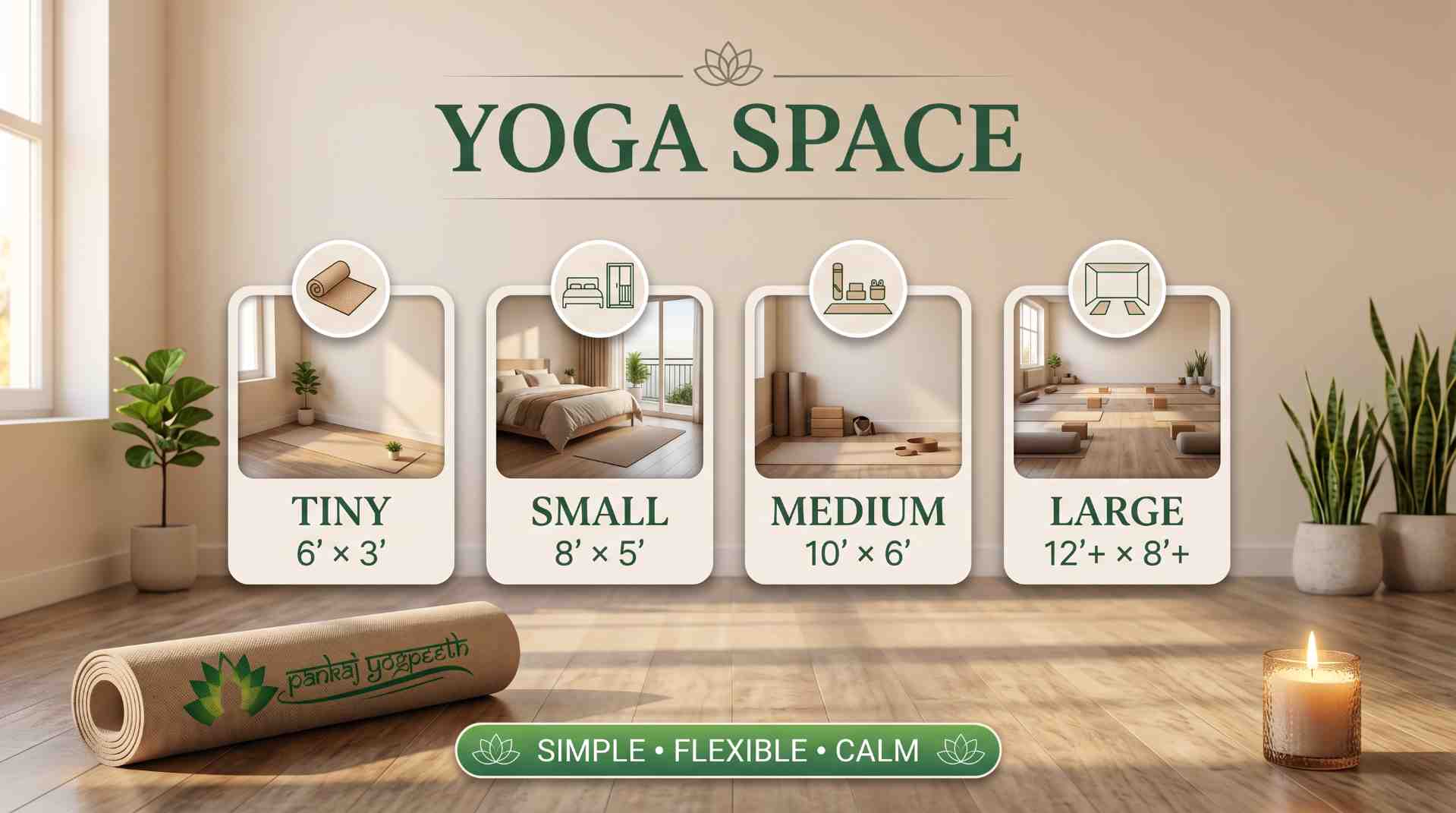
Space Layout Options
| Space Type |
Dimensions |
Best Setup |
| Tiny corner |
6' x 3' |
Roll mat out during practice, store after |
| Small room |
8' x 5' |
Bedroom corner or balcony, perpendicular to wall |
| Medium space |
10' x 6' |
Dedicated corner with mat laid out permanently |
| Large room |
12'+ x 8'+ |
Full yoga zone with props shelf, facing window or blank wall |
Quick Layout Tips
Face your mat toward a window or a blank wall to block out as many distractions as possible. Leave at least one foot of space on all sides so that you can move your arms. Check the ceiling height before you do standing poses; you need to be able to lift your arms high.The room you have changes how you practice. Begin where you are. More important than the square area is the discipline.
How to Maintain Consistency in Your Home Yoga Space
It's easy to make the room. The real practice starts when you show up every day. How to make a daily yoga routine that works at home that you can keep up with.
Simple Habits That Build Consistency
- Set a time. Stick to the same time every day-early in the morning is best. Rhythm makes your body work. Once a few weeks have passed, you'll feel ready on your own.
- Start small. Start with 15 to 20 minutes. Long, spotty workouts aren't as good as short, daily ones. Build up slowly as the habit gets stronger.
- Get your room ready. If you can, leave your mat out flat. You're more likely to show up for practice if you don't have to fight with it.
- Keep track of your work. After each meeting, mark it in the calendar. Seeing days in a row gives you motivation and keeps you responsible.
- Do the work even if you don't want to. Your body fights you some days. Just show up, even if it's only for 5 minutes. It's not about the desire to be disciplined. It's about keeping your promise, no matter how you feel.
When you stop negotiating with yourself, your daily home yoga practice will stick. There is the mat. You show up. That's being consistent.
Common Mistakes to Avoid
Many people who want to do yoga at home make mistakes that keep them from starting or finishing. Stay away from these usual mistakes:
- Wait for the right set-up. Begin with what you have now. It's not good to try to be perfect.
- Do not buy too many yoga props. You only need a mat and yourself to begin. Don't add tools until your practice really needs them.
- Don't practice all the time. Even 10 minutes a day changes things more than 90 minutes once a week. More important than length is consistency.
- Don't use places that are loud or crowded. It doesn't have to be big, but it does need to be quiet. Outside chaos leads to inside chaos.
- If you don't make these mistakes when you do yoga at home, your practice will go very smooth.
Home Yoga Space Tips for Beginners
Starting beginner yoga at home feels overwhelming when you see elaborate setups online. Ignore all that. Here's what actually matters when you're just beginning.
Beginner Essentials for Home Yoga
| What You Need |
Details |
| Space |
A clean corner, 6' x 3' minimum |
| Yoga mat |
Basic non-slip mat, any brand works |
| Clothing |
Comfortable old t-shirt and loose pants |
| Time commitment |
20-30 minutes daily |
| Props |
None needed initially |
| Budget |
₹500-₹1,000 to start |
Let Your Practice Grow Naturally
Put away the props until you need them. Don't make your space bigger until your business needs it. Start small. Believe in the process. As you start practising yoga at home as a beginner, you will find that each step builds your resistance. The first week won't be the same as the first month. The first month won't be the same as the first year. That is the right way to do it. Begin with something easy. Show up every day. Everything else comes after.
Practice Authentic Home Yoga with Pankaj Yogpeeth
You've made your own place. You already know what you need. Now comes the most important part: real yoga practice with the right help. A place to do yoga at home is just the start. How you practice-the way you stand, breathe, and be aware-is what changes you for real. Even the best setup is useless without the right instructions.
Pankaj Yogpeeth teaches classic yoga based on the breath, which can be safely and effectively practised at home. You should learn from teachers who know how to apply yoga from the past to current life. You don't have to figure it out on your own.
The room is ready for you. Your mat is ready. Start your journey with Pankaj Yogpeeth. With their online yoga lessons, you'll feel like you have a teacher right next to you.You can start practising now.