Why Are More Students from Austria Choosing Yoga Teacher Training in India?
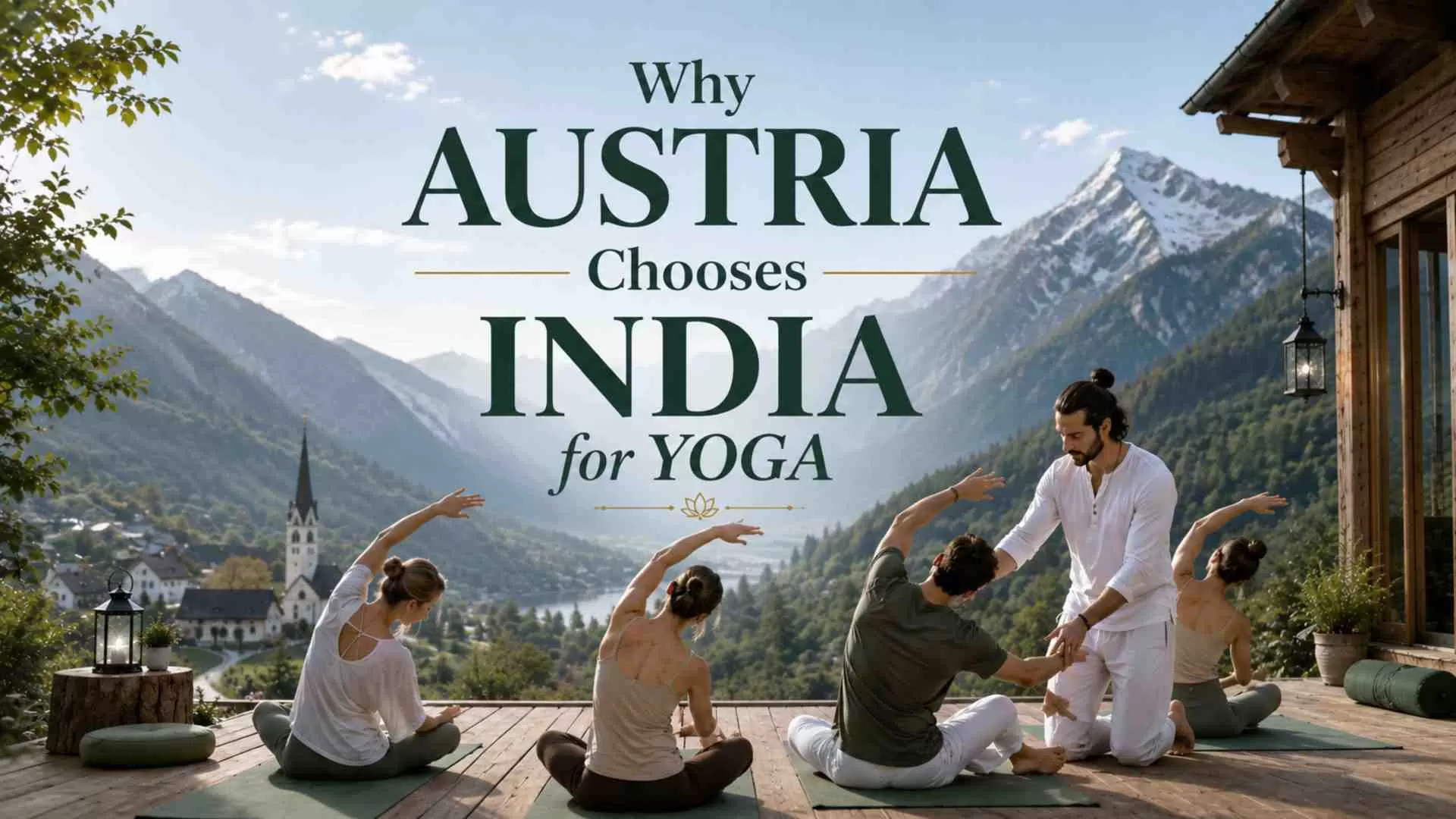
Instead of taking an expensive course back home, more people from Austria pack their bags and fly east to India to learn yoga every year. It makes sense. India is where yoga originated, so if you train there, you will learn the full form of the practice, not a shortened version taught in a city centre. For many Austrians, it is also quite affordable. A full residential course often costs less than the course fee alone in Europe.
This guide tells you everything you need to know before you go. Why do so many people want to become yoga teachers, What does a course really cost, Where are the best places to train, What level of course is best for a beginner, Does a 200-hour yoga teacher training program in India count back home in Austria and Europe, How do I get there, You can plan your trip with confidence because the tips come from years of working with Yoga Alliance classes and the teachers who run them.
What Makes Austrian Students Choose Yoga Teacher Training in India?
A lot of people in Austria want the real thing. If you want to become a yoga teacher in India, you have to learn the practice from teachers who grew up with it. What is it about this job that keeps bringing in trainees from Europe? A mix of clarity, depth, and value that is hard for home courses to beat. People from Austria come here because:
- The source: finding out where yoga came from instead of getting it from somebody else.
- Full commitment: living it every day, not one weekend at a time.
- More per euro: deeper training at half of the European price.
Learning Yoga at Its Birthplace in India
Training as a Yoga Teacher in India Compared With Austria has advantages that local schools cannot provide. You will be living among fellow students and learning the history, heritage and philosophy of the culture, not as an add-on, but as part of a daily routine.
Yoga Teacher Training in Austria vs India
Many people wonder why they should learn yoga in India when they can do it in places much closer to home. When you compare the two, the answer becomes clear. This short table shows how training is really different in India and Austria.
| Factor |
Austria |
India |
| Cost (200-hour) |
€2,000–€4,000 and up, course fee only |
USD $600–$2,800 (₹50,000–₹2,40,000), stay and meals included |
| Format |
Mostly part-time, weekends |
Full residential immersion |
| Depth |
Modern, fitness-led |
Traditional lineage and philosophy |
| Setting |
Home city studio |
Himalayas, coast, ashram life |
There is no way to miss the pattern. What's better: staying close to home in Austria or going to India? India gives you more for your money and more meaning.
This trade-off carries a lot of weight when people are trying to decide which country is best for yoga teacher training. As soon as the form is clear, most people think about how much it all costs.
How Much Does Yoga Teacher Training in India Cost Compared to Austria?
This is the point where most people decide. In India, a full residential course normally covers your room and meals. However, in Austria, you will generally only pay the course fee, and that’s before you even book a place to stay.
In short, the cost of yoga teacher training in India gets you a lot more. Is the cheaper option really as good as it sounds? Mostly yes, since the lower price is due to lower costs in the area, not less training. This is where your money goes:
- Budget yoga stays: they are real and simple, and they cost between USD $600 and $1,000 (₹50,000 to ₹85,000).
- Mid-range schools: USD $1,000 to $1,800 (₹85,000 to ₹1,55,000), more comfort and facilities.
- Premium retreats: up to USD 2,800 (₹2,40,000), with all the comforts.
What the India Course Fee Usually Includes
India's affordable yoga teacher training usually comes with a lot more than a course in Europe. Most of the time, the price includes your room, meals, supplies, and certificate. This way, you won't be surprised later.
| Cost item |
India (typical) |
| 200-hour course fee |
USD $600 to $2,800 (₹50,000 to ₹2,40,000) |
| Accommodation |
Usually included |
| Daily meals |
Usually included, vegetarian |
| Certificate |
Included |
| Flights from Austria |
Extra |
When you add it all up, the gap is clear. Many times, the cost of the course in India is less than the cost of the course alone back home. This is why so many people from Austria choose to become yoga teachers in India.
With the price in mind, the next question that comes to mind is where to go in India.
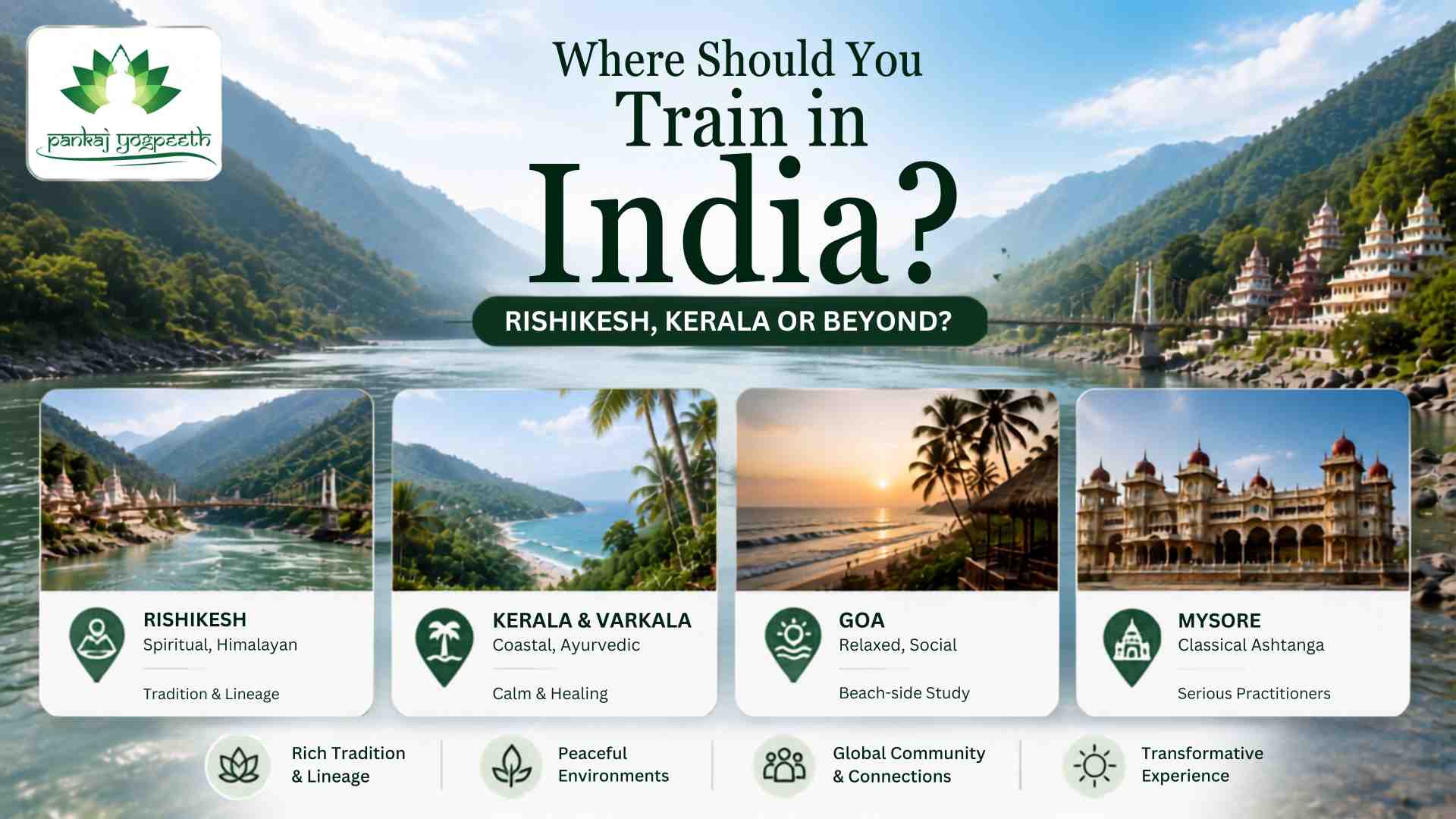
Where Should You Train in India - Rishikesh, Kerala or Beyond?
India is big, and the place where you train changes everything. You can get a different vibe from the coast to the mountains, so it pays to be careful about where you go. Which place is right for the trip you want? That depends on whether you want to be alone and concentrate or do things with other people. It's easy to arrange the main choices.
Rishikesh, the Yoga Capital of India
In Rishikesh, becoming a yoga teacher is at the centre of everything. There are the most schools and a strong sense of tradition in this Himalayan town. Since it gets very hot in North India in the summer, the best time is from autumn to spring.
Kerala, Goa and the Southern Options
Ayurveda and yoga Teacher training work well together in Kerala, especially around Varkala, on the coast. Anyone looking for a comfortable place to learn how to be a yoga teacher can find it in Goa. Mysore is a standard choice. Away from the monsoon, the best months are the cooler, dry ones.
| Region |
Feel |
Best for |
| Rishikesh |
Spiritual, Himalayan |
Tradition and lineage |
| Kerala and Varkala |
Coastal, Ayurvedic |
Calm and healing |
| Goa |
Relaxed, social |
Beach-side study |
| Mysore |
Classical Ashtanga |
Serious practitioners |
The answer comes down to how you feel. The best place to learn how to be a yoga teacher in India is the one that fits your needs and goals for the weeks you spend there. Rishikesh has a lot of history and depth, while the south is peaceful and by the water.
Once you know where to go, it helps to know what level and style of course is best for a first-timer.
Which Course Level and Style Suits a Beginner From Austria?
When you first start, the most important things are which style to learn and how many hours to book. You are not stuck on one road because most Indian schools teach a mix of subjects. Do you need any skills before you go? Courses don't really turn you from an energetic beginner into a sure-of-yourself teacher.
In terms of style, you'll mostly meet three. Hatha gives you strong, slow foundations, Vinyasa classes are dynamic and flowy, and Ashtanga is the traditional, strict way to do yoga. To start, Hatha or a mixed training works well.
100-Hour Course in India
To become a yoga teacher in India you need to do a 100-hour course for 10 to 14 days. It's a nice way to see how things go before committing to a longer course.
200-Hour Course in India
You can do a 200-hour yoga teacher training course in India, which takes 24 to 28 days to complete. This is the level that allows you to teach, and is the level most beginners choose as a first step.
300-Hour Course in India
Next is a 300-hour yoga teacher training in India that takes four to six weeks. It's for people who want to go further with the 200-hour certificate they already have.
| Course |
Typical length |
Best for |
| 100-hour |
10 to 14 days |
A first taste |
| 200-hour |
24 to 28 days |
Becoming a certified teacher |
| 300-hour |
4 to 6 weeks |
Building on a 200-hour |
For most Austrian beginners, the 200-hour yoga teacher training in India is the best option. It leads to a recognised teaching certificate, and the other courses can be used to get a feel for the style or go deeper later.
For most Austrian students, it's important to know whether the permit will be recognised back home before they book.
Is Yoga Teacher Training in India Recognised in Austria and Europe?
This is the worry that keeps a lot of people from booking. The short answer is very good news: an officially recognised Indian school is accepted all over Europe, even in Austria. How does a certificate really matter back home? That's what it's about, not the country where it was earned. Before you pay, do these quick checks:
- Do not believe a school's logo: instead, check the school's listing in the official Yoga Alliance registry.
- RYT-200 certificate: the global standard, valid across Europe.
- Named lead teacher and open syllabus: simple signs of a real school.
Yoga Alliance and Teaching Back Home in Europe
Getting certified as a yoga teacher through the Yoga Alliance in India gets you a RYT-200 that you can use to teach in Austria and the rest of the European Union. Because of this, many trainees ask whether yoga teacher training in India is recognised in Europe.
The answer is yes, because European schools give the same certificate. An Indian yoga certificate is valid anywhere in the world as long as the school is registered. This means that if you have an Indian certificate, you can teach yoga in Austria without any problems.
Now that you have the certificate, the last real thing is to make sure you get there safely.
What Austrian Students Need to Know About Visas and Travel to India
The documentation doesn't sound as scary as it is. Most of the time, an e-Tourist visa is enough for a short 200-hour course. However, a longer program may need a Student visa, so check with your school and the Indian embassy in Austria first.
Is this kind of trip safe in India? In general, yes, especially for female trainees travelling alone and having a good time. The best months are from October to March, when it is cooler and drier.

Indian Visa Rules for Austrian Citizens
The length of your course determines your yoga teacher training visa in India. Austrians can apply for an e-Visa for India, which makes things easy for short learning trips. For most 200-hour classes, it’s an easy online application for an India visa for Austrian citizens.
Getting from Austria to Rishikesh and the South
Getting from Austria to Rishikesh is quite easy if you know how. There is no direct journey, so most people will go via Delhi to get to the north. To get to the yoga towns from there, you can either take a short hop or a drive through beautiful scenery.
| Visa type |
Best for |
Notes |
| e-Tourist visa |
Short courses under a month |
Comes in 30-day, 1-year and 5-year variants; a 24 to 28 day course fits the 30-day window |
| Student visa |
Formal or longer training |
Needs a school admission letter; cannot be converted inside India |
You can fly from Vienna (VIE) to Delhi (DEL), then drive or take a short flight to Dehradun (DED). To get to the south, fly into Trivandrum (TRV) or Kochi (COK). One school stands out as a good place for Austrian trainees to start because it takes care of travel.
Why Pankaj Yogpeeth Is a Strong Choice for Austrian Trainees
The short list is more important than the search at this point. What should a trainee from Austria really look for in a training institution? There should be real teachers, fair prices, and a place that supports practice rather than getting in the way. Pankaj Yogpeeth gently checks these.
Train with Pankaj Yogpeeth in India and Nepal
At the heart of what they do in Rishikesh is yoga teacher training, rooted in the same Himalayan heritage that brings people to India in the first place. Varkala in Kerala is a calm beach town that can be added to the list. Pokhara is where yoga teacher training takes place in Nepal.
Check out the classes at Pankaj Yogpeeth for real yoga teacher training that covers everything.It all comes down to one easy choice, no matter which path you take.
Starting Your Yoga Teacher Training in India the Right Way
All of this has one thing in common: India is a great place to start if you are looking for depth, value and honesty. What should be your first step? Choose a place that works for you, make sure that the school is up to date and book early enough to plan the trip well.
Those in Austria who are ready for becoming a yoga teacher, can begin their yoga teacher training with Pankaj Yogpeeth in Rishikesh, Varkala or Pokhara. That's how good teachers develop themselves: they pick the place that fits their needs, not the one with the most beautiful picture.